
Brass catches the eye because it adds warmth as well as reflection. Against deep blue, forest green or white, a small metal detail can change how the entire surface reads. The challenge is proportion: a room does not need to be covered in gold tones to feel connected.
Brass is an alloy made primarily from copper and zinc. But a product described as having a brass finish may use a coating rather than exposed solid brass. That difference matters as much for maintenance as for appearance.
Build a thread between rooms
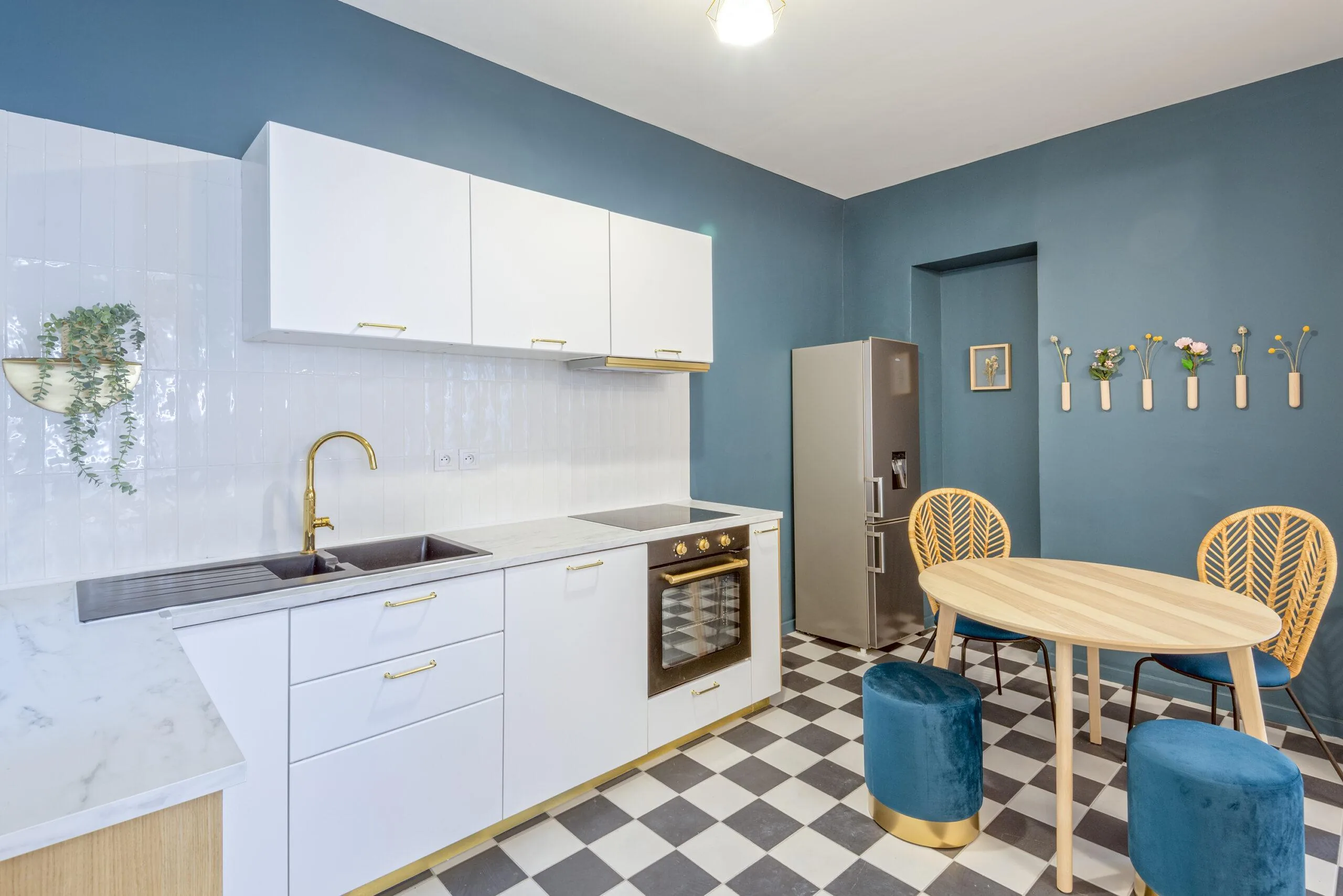
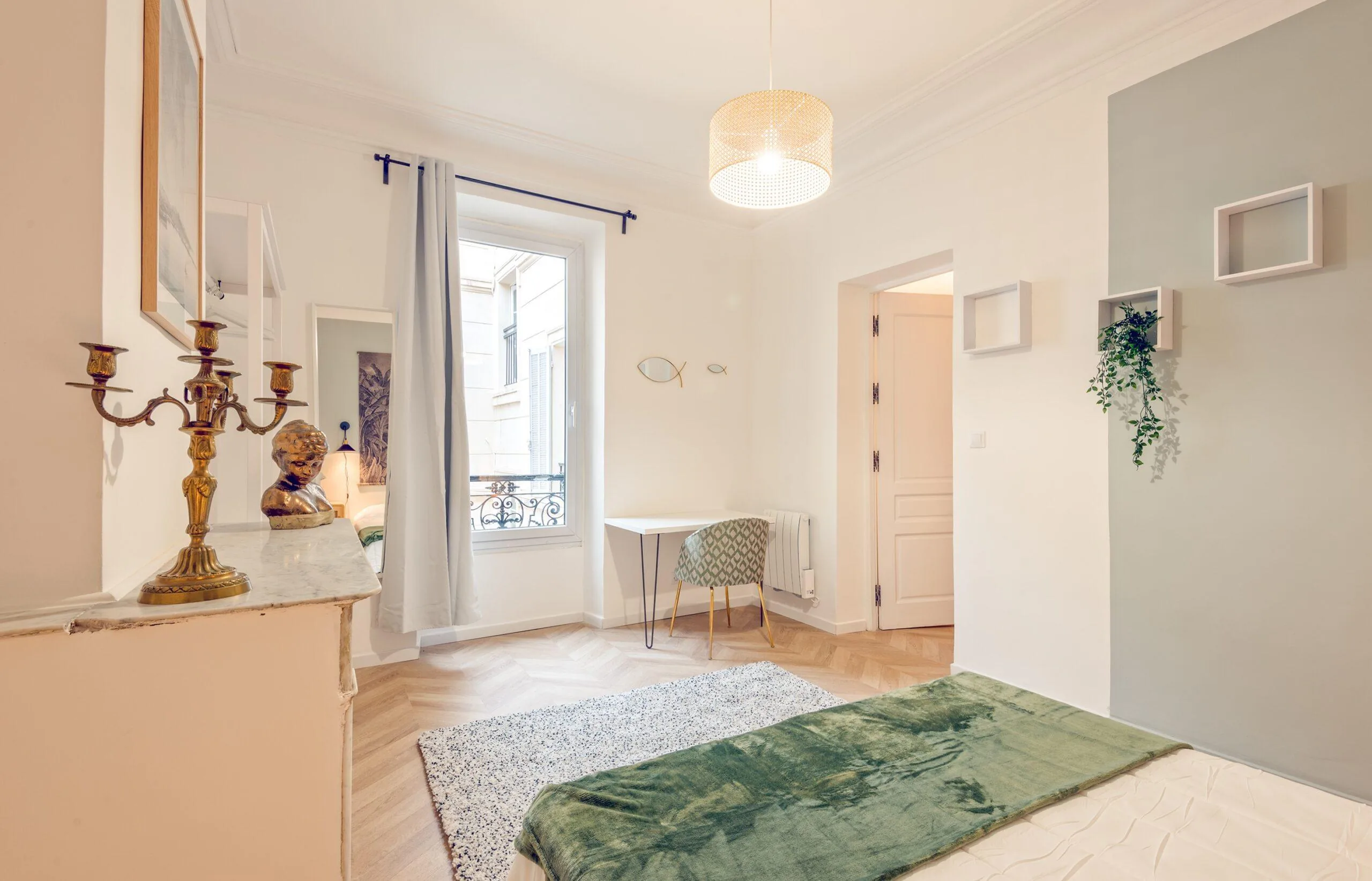
In the renovation of an 80-square-meter two-bedroom apartment with ceilings close to 3 meters high, the palette combined peacock blue, light wood, white and brass details. A non-load-bearing partition was altered to open the kitchen toward the living room.
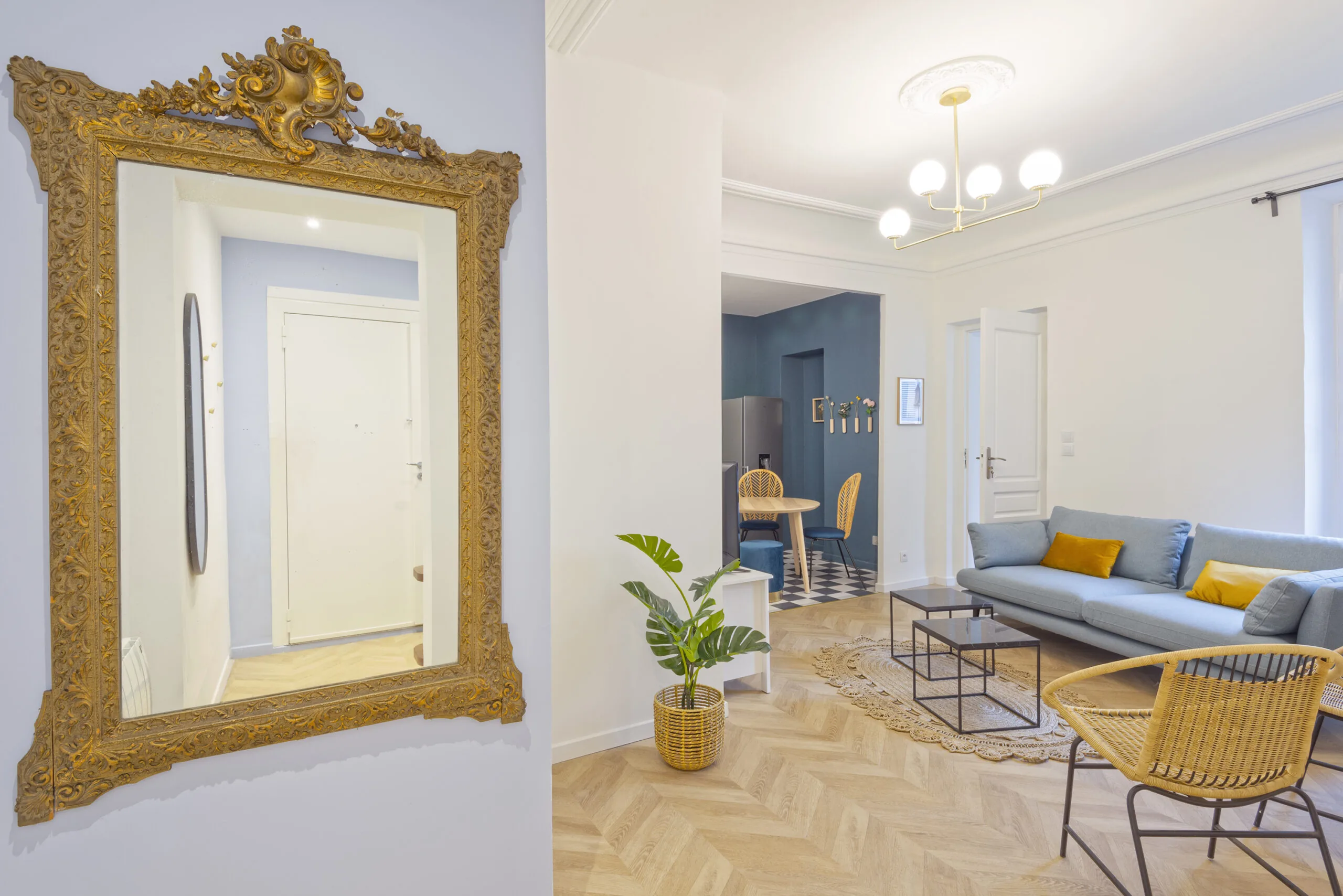
Glossy zellige-effect backsplash tiles complemented the blue cabinetry, while a black-and-white checkerboard floor added a vintage note. Brass was used in accents rather than as another dominant surface. In the living room, a pendant combining gold-toned elements and frosted glass carried the idea onward.
This is what repetition can achieve: a handle, a light or a mirror can connect rooms without making them identical. A bedroom only needs a few related objects to belong to the same visual story.
Use a kitchen’s small fittings deliberately
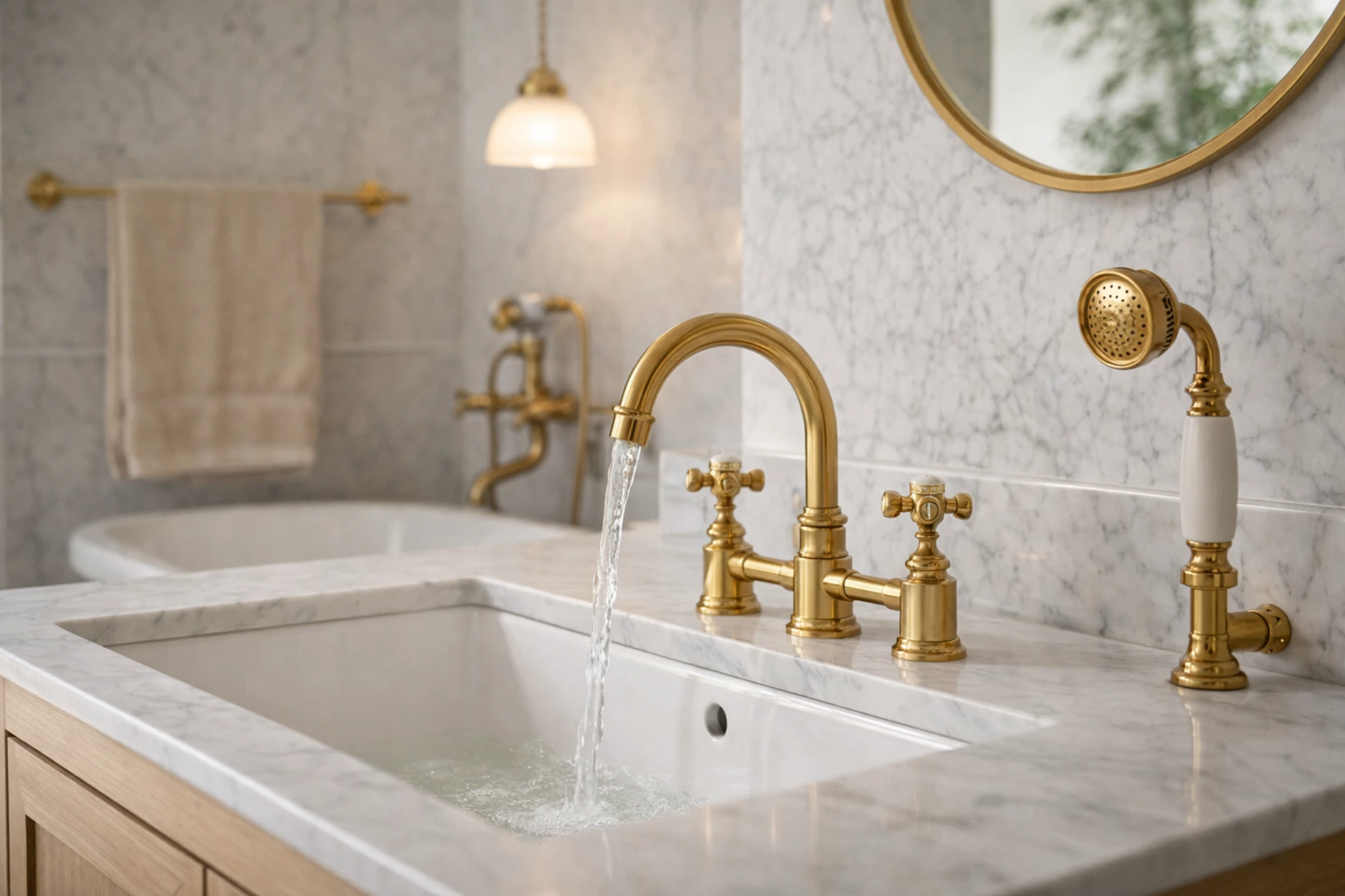
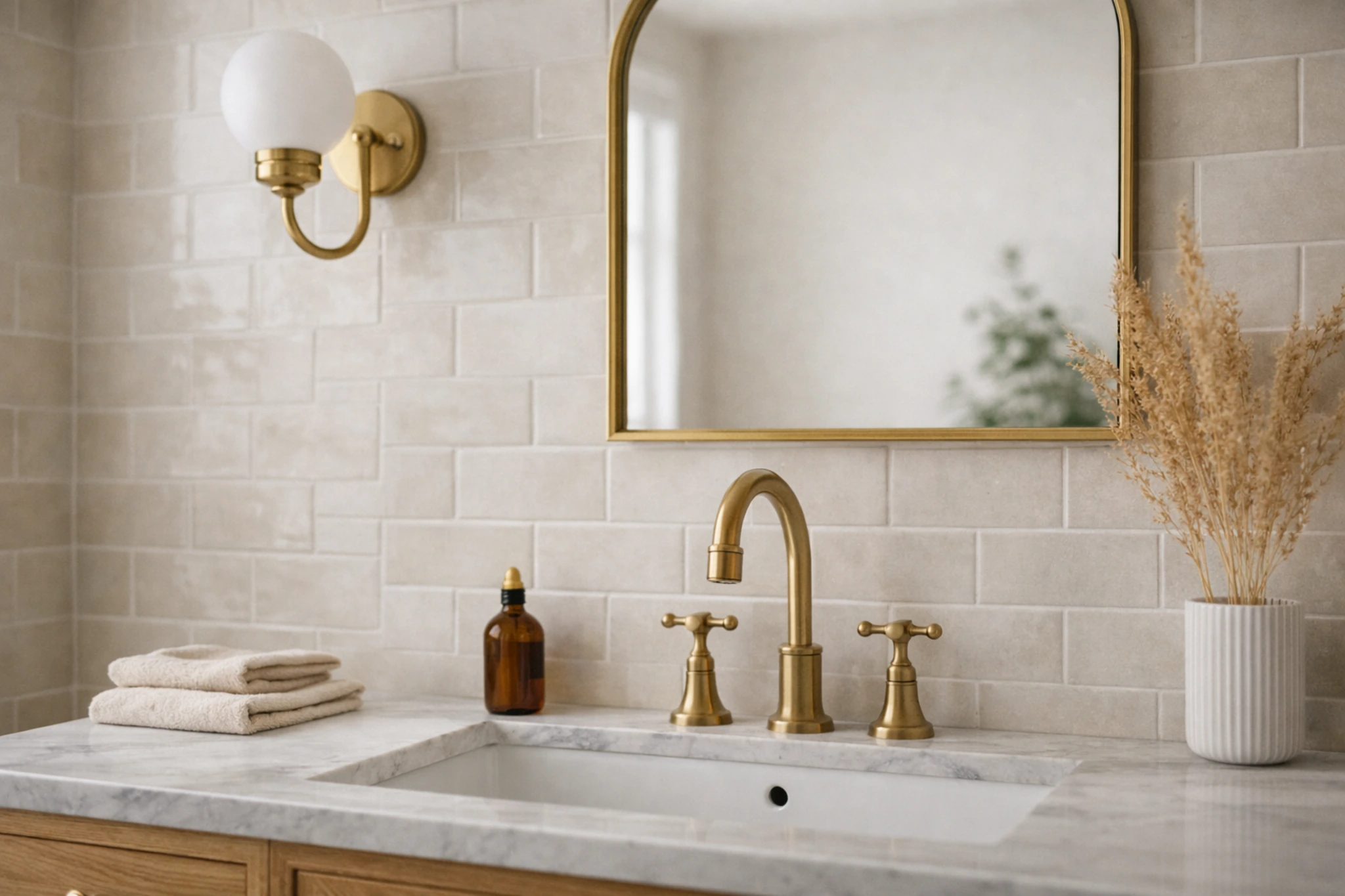
A brushed-brass faucet and new cabinet pulls can introduce a warm accent to a white or midnight-blue kitchen. Look at them together before choosing either. Their scale, shape and finish need to work with the cabinets and worktop, not merely match a metal name on a product page.
Brushed or aged finishes offer a softer effect than highly polished yellow tones. They may also make everyday marks less conspicuous, although no finish is entirely immune to fingerprints or cleaning traces.
See our projects in video
Real floor plans and renovations explained step by step on the ArchiWorking YouTube channel. Watch how spaces are reworked before the works begin.
In a bathroom, think beyond faucets
White marble-look tile and brass fittings create a recognizable combination. Keeping the mirror and textiles simple lets those two materials do the work. But brass can also act as an architectural line rather than a decorative object.
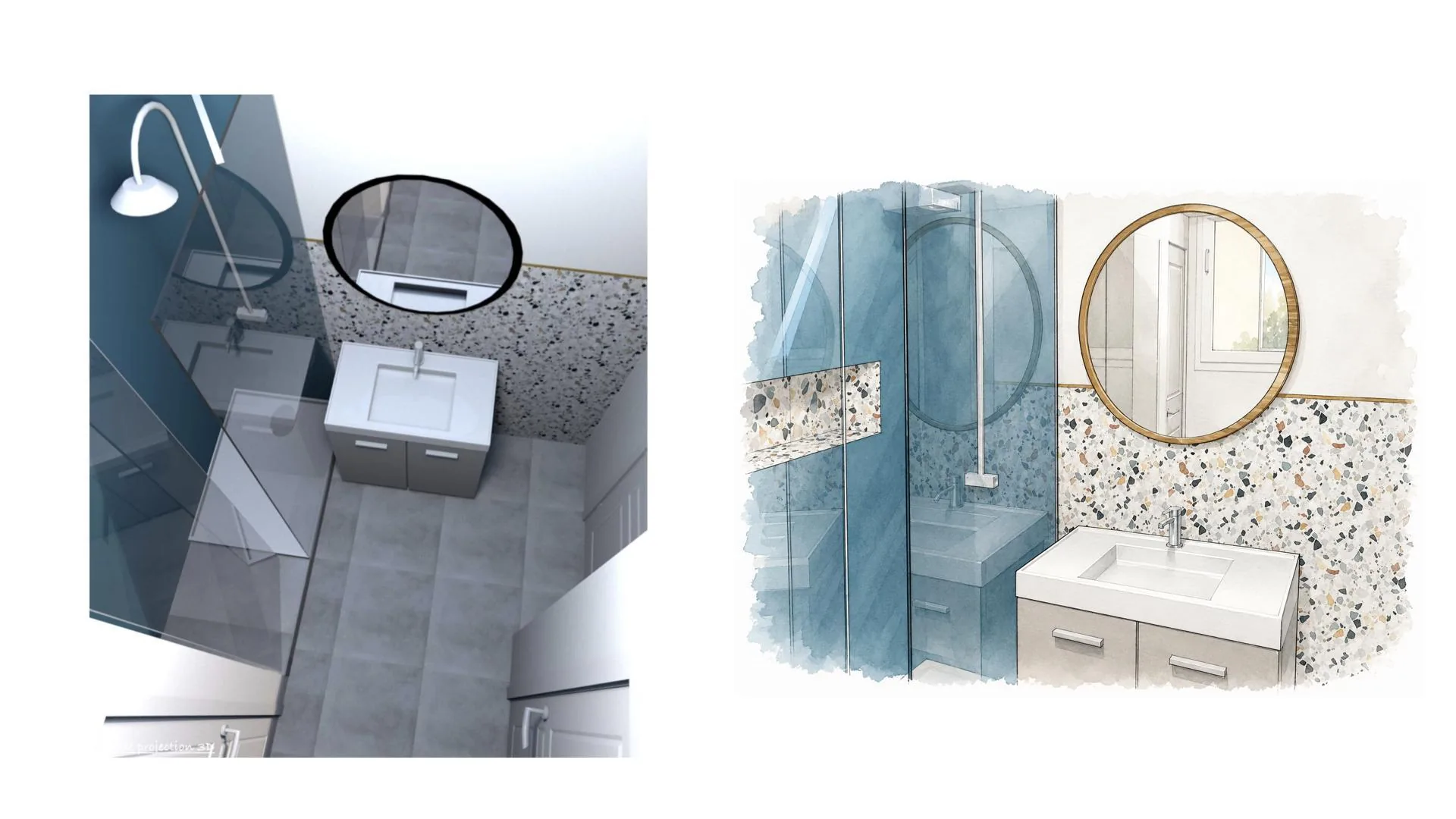
In a renovation study for a 110-square-meter period apartment, the bathroom had pale-gray 60 by 60 cm floor tiles, a terrazzo lower wall section and dark-blue rectangular shower tiles. A brass trim at the top of the terrazzo marked the transition between finishes. The shower niche repeated the terrazzo, reinforcing the composition.
That slim profile had a clear purpose: it emphasized the horizontal division without adding another bulky element. The result depended on placement and proportion, not on the quantity of metal.
Decide on the finish before deciding how to clean it
Unlacquered brass develops a patina. That change can be desirable, but it is not how every modern brass-colored faucet behaves. Lacquered surfaces and PVD coatings have their own care requirements.
Use the manufacturer’s instructions as the starting point. Abrasive pads can permanently damage a coating, and a household recipe suitable for one bare metal may harm another finish. Avoid treating lemon, baking soda or metal polish as universal solutions.
Keep the palette legible
Deep blue, green, matte black and charcoal make warm metal stand out. White gives a lighter contrast. If you introduce other metals, make the hierarchy intentional rather than letting unrelated fittings accumulate. Repeating one main finish is often the clearest starting point.
For a related look at kitchen planning, see our guide to kitchen layouts. The layout should still work when every decorative accent is removed.
Brass questions
Does brass rust in a bathroom?
Brass does not rust like iron, but exposed brass can oxidize and change color. Coated fixtures behave differently, so check the actual product rather than relying on its appearance.
Is brushed brass completely fingerprint-proof?
No. Its softer texture can make marks less visible than a polished surface, but handling and maintenance still matter.
Must every metal in a room be identical?
Not necessarily. A consistent main finish makes coordination easier. If other metals are present, consider their visual weight and repetition so the mix looks deliberate.