
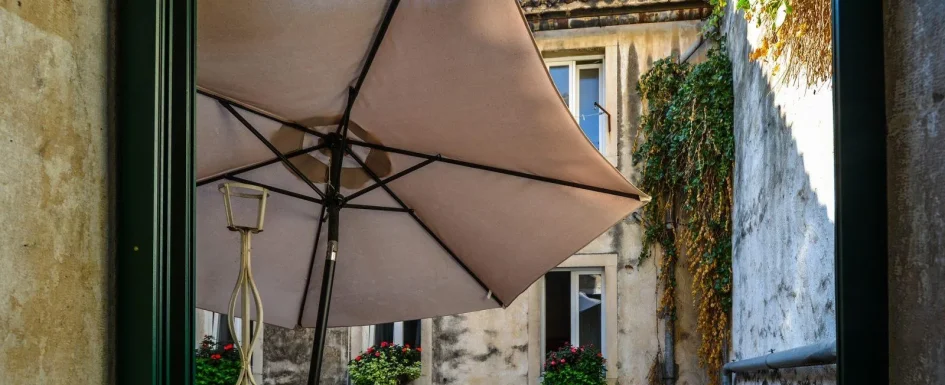
A balcony can become a useful extension of the home: a place to sit, share a meal or enjoy planting when there is no garden. Treat it as an outdoor room, while respecting what makes an elevated platform different from an interior floor.
Begin with one clear use, then connect colors and materials to the room inside. The small balcony and terrace guide develops that choice when space is limited.
Check water and support before decorating
Know how rain drains and what the structure can carry before adding flooring or containers. Wet soil, heavy pots and stored water can weigh far more than their empty appearance suggests.
The article mentions 250 to 350 kg/m² as a range sometimes encountered in discussions of balconies. It is not a verified capacity for your building, a universal standard or an amount available solely for new furniture.
Use the building’s documentation and appropriate structural advice where needed. People, existing construction and all added loads must be considered, especially before large planters or any basin of water.
Shared-building rules may also govern finishes, colors and fixings. Do not assume a removable-looking addition needs no permission or technical check.
Give the floor a role without obstructing drainage
Timber deck tiles, including suitable acacia or treated pine products, can bring warmth. They need a compatible support, outdoor specification and the maintenance appropriate to the product.
An outdoor polypropylene rug offers another way to define a small dining zone. Follow cleaning and drying instructions rather than treat every outdoor rug as immune to retained moisture.
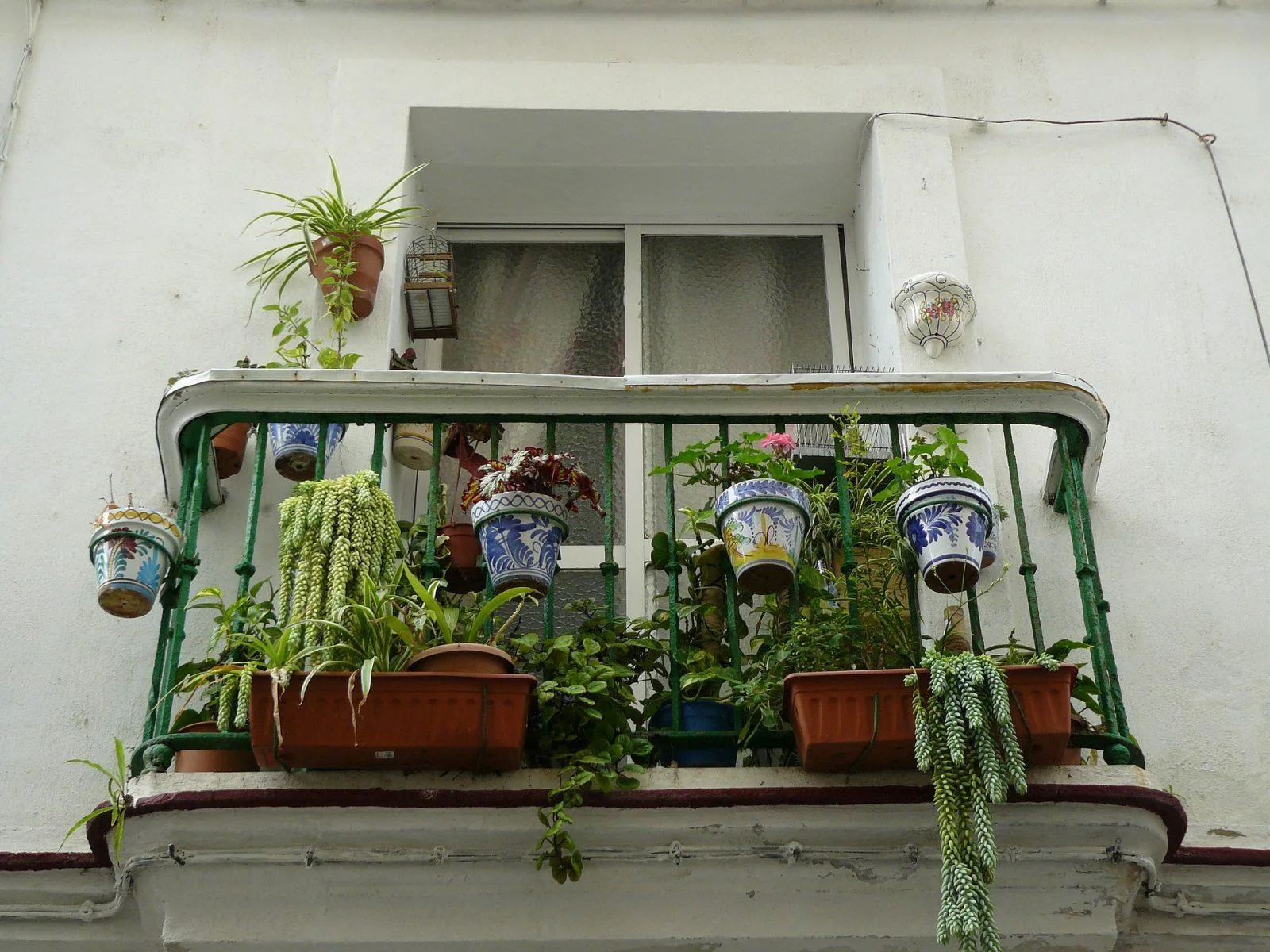
Keep falls, outlets and inspection access clear. Neither tiles nor a rug should conceal a drainage problem or direct wash water onto neighbors below.
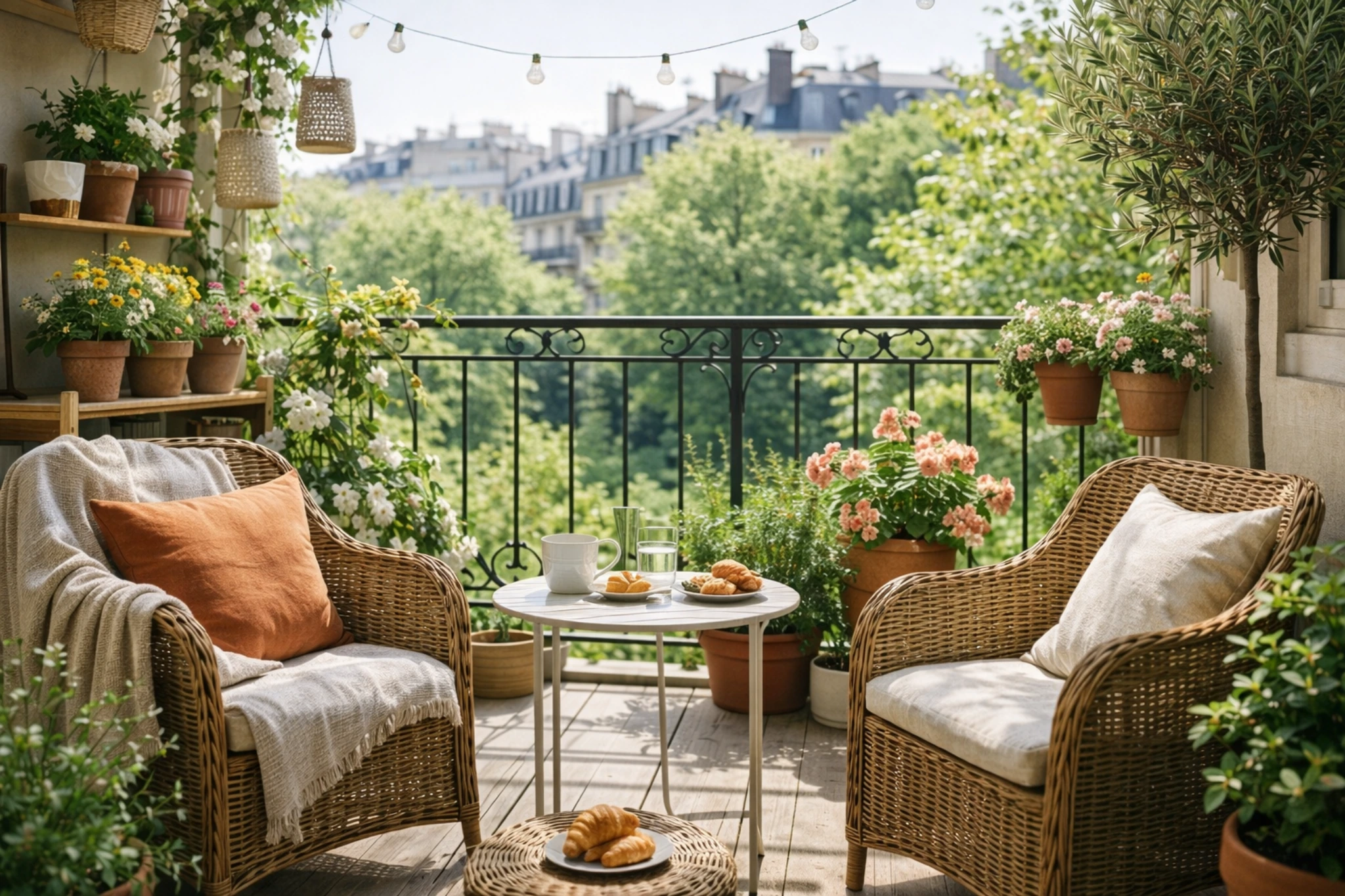
The first two photographs retain compact furniture, planting and a defined outdoor floor, including the rattan-furniture example. Their appeal comes from the whole arrangement, not from covering every surface.
Use furniture that leaves the route usable
On a balcony narrower than 1 m, a foldable table and chairs may be more useful than a miniature permanent dining set. Test the occupied chair and door swing, not only the furniture folded away.
A railing-mounted table is an option only where the rail and attachment are suitable and permitted. Do not compromise guard performance or create an easy climbing step for children.
A storage bench can combine seating with space for tools and potting supplies where its position and weight fit. Foldable chairs may be stored on suitable wall supports, keeping access clear.
Bring the indoor palette outdoors through appropriately specified furniture and textiles. Indoor-only pieces do not become weather resistant because the colors match.
See our projects in video
Real floor plans and renovations explained step by step on the ArchiWorking YouTube channel. Watch how spaces are reworked before the works begin.
Combine privacy, shade and planting
Clumping bamboo such as an appropriate Fargesia or a climber such as star jasmine can form a planted screen where climate, light and container conditions suit them.
A tall planter is not automatically a lightweight screen. Check saturated weight, wind exposure and safe support, while avoiding a layout that invites climbing at the edge.
In the upper terrace of a two-level house, the project combined an adjustable electric awning, wood screens and a dining table. A custom matte-black powder-coated metal guardrail completed the scheme.
The article cites a 1 m guard height in the French NF P01-012 context. That is not a complete guard design or a transferable US requirement; geometry, openings, use and current local rules also matter.
The essential practical point is not to place furniture or containers so that children can climb over a protective edge.
Choose plants from exposure rather than a mood board
For a hot south-facing position, suitable lavender, rosemary, bay or succulents may be possibilities. In a shaded or north-facing position, appropriate ferns and plants favoring cooler conditions offer another palette.
These are starting families, not a guarantee that every named plant tolerates every regional climate. Watering, frost, reflected heat and container size still need checking.
In the adjoining bright patio of the terrace project, blue bejmat tiles laid in herringbone contrasted with a strong yellow wall. The photograph preserves the potted olive tree as well as that color relationship.
The outdoor dining guide considers how those choices relate to use. A patio example can inform a palette without establishing that its heavy surface belongs on another balcony.

Light the arrival and the table
A string of suitable outdoor lights, a portable table lantern and more functional light near access can create different roles after dark.
Aim warm ambient light without shining directly into neighboring homes. Where there is no outlet, solar fixtures or suitable USB-rechargeable lanterns may help, but assess their actual output and exposure rating.
Frequently asked questions
Can a barbecue be used on a balcony?
Check building, fire and local rules first. Charcoal is often restricted; an electric model is not automatically permitted or free of smoke and nuisance concerns.
Does a 250 to 350 kg/m² reference establish safe load?
No. It is a general reference from the article, not a structural authorization. Verify the actual building and the full load before adding heavy objects.
Must a small balcony contain both dining and lounging?
No. One comfortable primary use is often better than overlapping furniture that blocks the doorway and circulation.