
Mexican-inspired decorating works best as a considered combination of raw materials, a controlled color palette, and a few strong craft pieces. It is not a party backdrop. Pattern, planting, shadow, and furniture can give a home warmth without covering every surface in a motif.
The references here range from pre-Hispanic Aztec and Maya influences to contemporary design, traditional crafts, and modern architectural color. They are starting points, not a claim that one style represents all of Mexico. Reinterpreted chevrons, vintage furniture, embroidered textiles, and an industrial glazed partition can coexist when color provides a clear link.
Choose materials with a sense of earth and texture
Terracotta floors or warm-toned microcement can recall the earthy character of a hacienda. Dark solid wood such as walnut, pale driftwood-like tones, rattan, and woven cord provide other natural references. An Acapulco-style chair, for example, uses an open woven seat rather than a glossy furniture finish.
Textiles prevent the result feeling like a display of objects: a flat-woven wool rug, embroidered cushion, washed-linen throw, striped sarape, or animal-pattern Otomi embroidery can be enough. Mix selected finds and vintage pieces rather than buying every item as a matching set. See choosing a rug for proportion and placement.
For floors, hexagonal terracotta tomettes or orange-toned Saltillo tiles give immediate character. Their porosity requires appropriate water- and oil-repellent protection after laying, followed by the product’s specified wax, oil, or other care. Outdoors, choose a product declared frost-resistant rather than moving an indoor terracotta tile into an exposed location.
Talavera-style glazed tile, associated here with painted ceramics from Puebla, can concentrate pattern on a backsplash, stair riser, or suitable bathroom surface. Patterned cement tiles can play a similar spatial role; see cement tiles in renovation. Equipal chairs, with leather over a timber structure, woven seats, and oiled solid wood offer furniture alternatives with distinct material character.
Make three color families work together
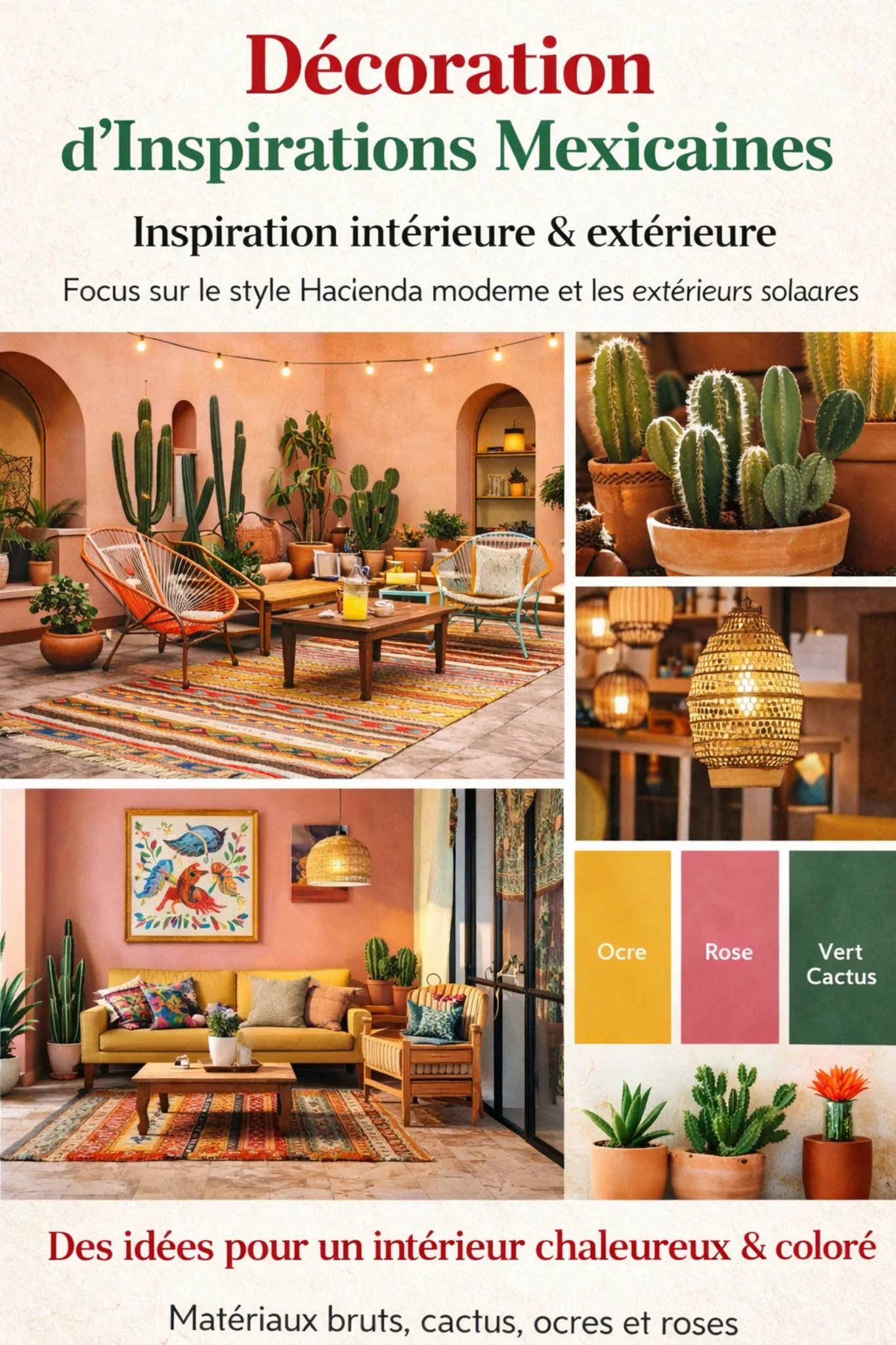
Ochre or mustard yellow can bring brightness to a wall or backsplash. Strong pink, including Tyrian pink, and terracotta can define a volume, recalling the role of saturated walls in Luis Barragán’s architecture. Cactus green, supplied by plants or selected paint, balances the warmer tones.
Limit the main palette to roughly three colors and keep substantial areas in warm white or sand. A niche, doorway frame, or single wall may carry intense color more effectively than an entirely saturated room. The contrast gives the strong surface its presence. Our articles on colored walls, yellow interiors, and orange and terracotta explore that balance.
For a matte, gently varied mineral appearance, limewash can suit a compatible prepared mineral substrate such as appropriate plaster or render. Over an existing painted surface, a compatible conventional matte lime-effect finish may be simpler. Check preparation with the manufacturer; the desired look does not remove adhesion requirements. Test ochres and pinks on site at different times because daylight and evening lighting change them markedly.
Outdoors: build a patio atmosphere around real conditions
The approach can suit a large terrace or small balcony. Group terracotta pots of varied sizes, use an appropriate graphic outdoor rug to define low seating, and add suitable exterior string lights for evening use. Grouping can feel abundant without blocking routes or ignoring load limits.
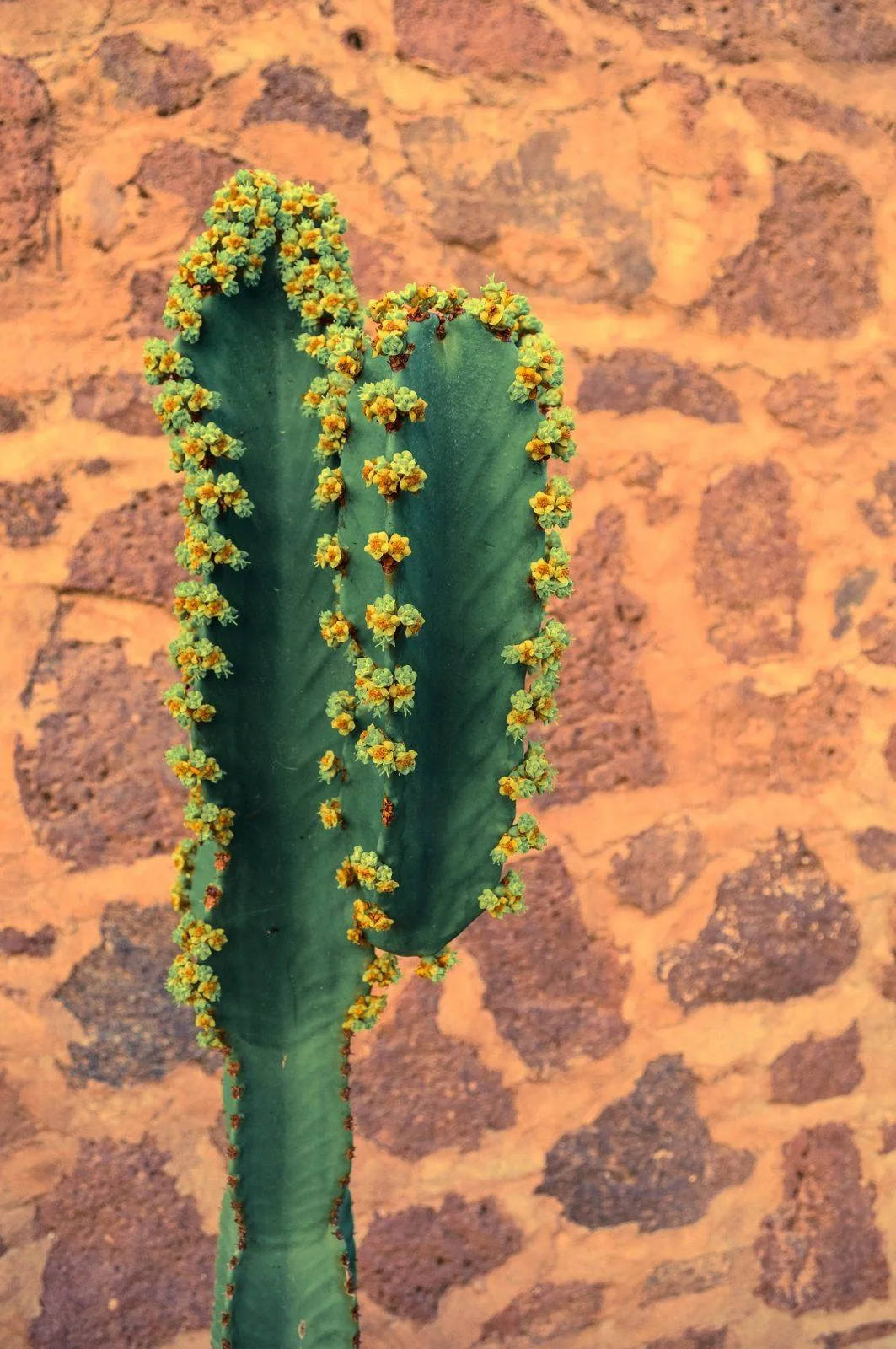
Cacti, agaves, and suitable succulents need plant-specific selection. Opuntia and Euphorbia can supply strong silhouettes, but euphorbias are not cacti and their irritating latex requires gloves and placement out of children’s reach. Check spines and access as well as appearance.
The source suggests a free-draining mixture with approximately one-third gravel or pumice-like pozzolana for suitable cacti and agaves, in perforated terracotta pots. Adapt the mix to the species and climate, and empty saucers after rain. Hardiness varies greatly: some tolerate light frost with dry roots, while others need shelter from around 0 °C. A generic “desert plant” label is not enough.
Outdoor terracotta must be frost-resistant where freezing occurs; terracotta-look porcelain is another option. The source cites outdoor-rated string lights of at least IP44 and an outdoor socket protected by a 30 mA residual-current device in its electrical context. Have equipment and installation selected for the actual exposure and local requirements rather than assuming those references cover every site. See planning a complete terrace for the wider arrangement.
See our projects in video
Real floor plans and renovations explained step by step on the ArchiWorking YouTube channel. Watch how spaces are reworked before the works begin.
Use contrast to modernize the composition
A graphic rug or colorful ceramic can feel stronger against calm white walls and a simple concrete floor than among many competing objects. Modern “mix and match” is about relationships, not literal reproduction of a themed room. An industrial glazed screen, selected reclaimed pallet furniture, or framed artwork can fit when their proportions and finishes connect with the overall plan.
Keep the craft object visible by letting surrounding surfaces rest. In a small home, one or two patterned areas are usually enough. Pattern guidance can help you compare scale and repetition rather than combining every motif simply because the colors match.
Strong sun also creates strong shade, and the architecture of light and shadow can inspire an evening interior. Woven or perforated metal lamps can project patterns onto walls, producing a more animated atmosphere than uniformly bright illumination. Position and suitability still matter; shadow is a design tool, not a reason to leave circulation unsafe. See also lighting ideas.
A restaurant example: strong identity, controlled surfaces
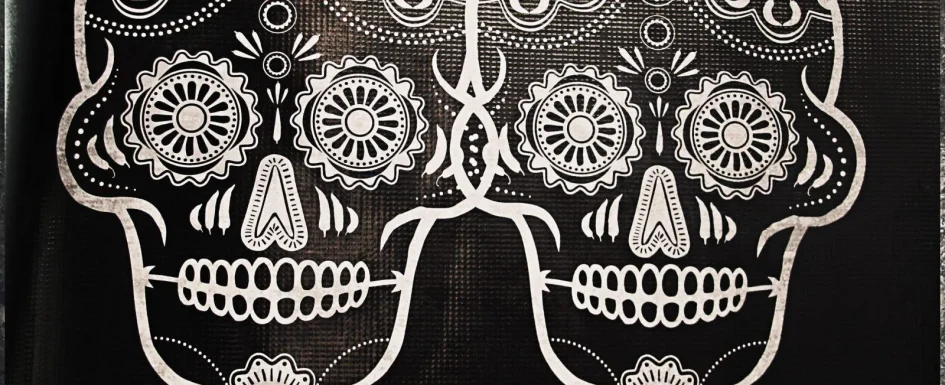
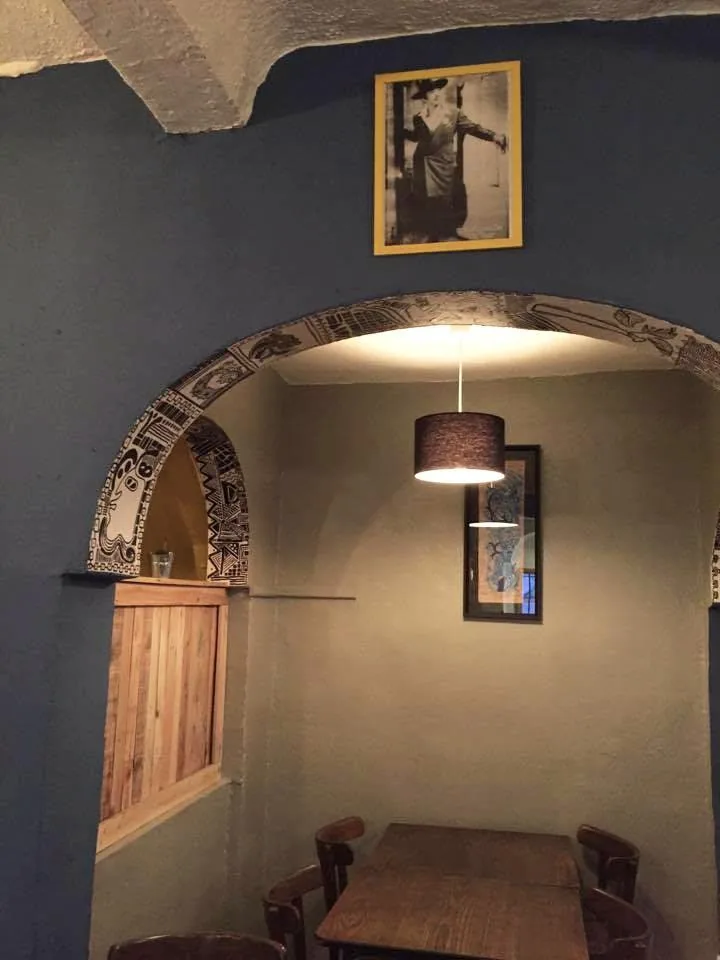
In the renovation of a small Mexican restaurant, the challenge was to express a clear cultural identity without overwhelming the dining room. A trompe-l’œil facade evoked Mexican architecture, continuing indoors with murals inspired by calaveras and folk art. Rather than adding another set of colors, the wall drawings were executed by hand in black and white with brush and marker.
The photograph shows a strongly blue wall and an arch outlined with monochrome motifs, with calmer surfaces around it. Concentrating the graphic work gave the room character without making every square centimeter equally busy. Read the La Morada restaurant story and its Huichol-inspired drawing project for the specific artistic approach.
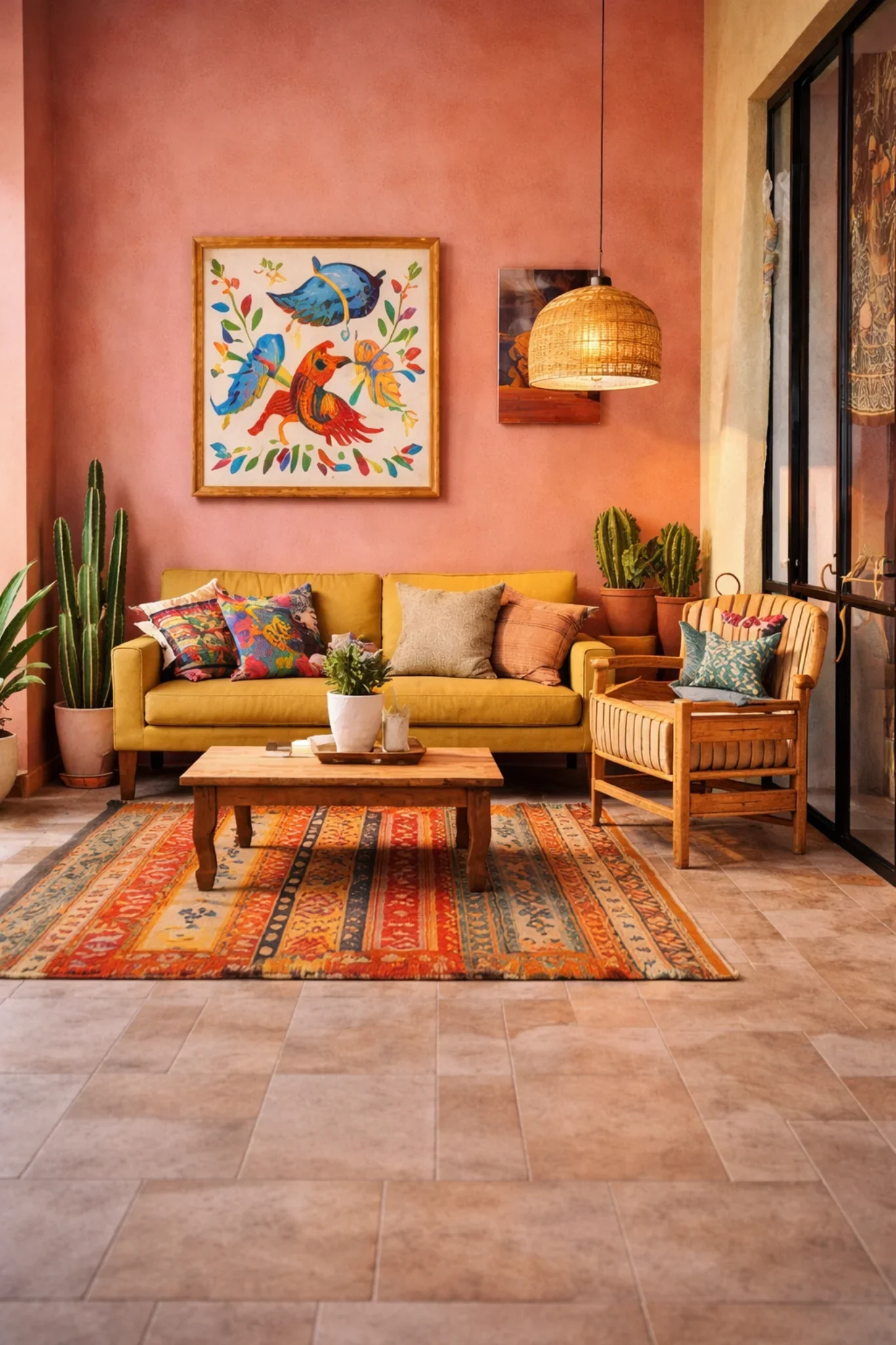
That lesson transfers to a home: raw materials, a measured palette, and selected handmade pieces can create warmth without an accumulation of references. The mood board, stone-and-cactus image, and terracotta-wall living room show different balances of color, texture, plants, and natural fibers rather than one fixed recipe.
Can this work in a small, dark apartment?
Yes, with a lighter base. Replace darker ochres on large surfaces with sand and warm white. Use stronger yellow or pink in a cushion, frame, or other limited accent so the room stays bright rather than uniformly saturated.
Can it work with Scandinavian furniture?
Yes. Pale wood and simple lines can provide the calm base, with graphic Mexican textiles and suitable succulents adding warmth and personality. The combination is sometimes described through boho or Scandicraft references, but the label matters less than proportion.
Which floor suits the atmosphere?
Terracotta or Saltillo-type tile offers a direct earthy reference and needs appropriate protection. Warm-toned microcement or terracotta-look porcelain provides alternatives with different care requirements. Outdoors, verify frost and slip suitability for the actual location.
How do I avoid a party-decoration effect?
Restrict the main palette, concentrate patterns on one or two surfaces, and keep room for warm white and natural materials. A strong craft piece in a restrained setting can do more than many unrelated themed objects.