
Xeriscaping is a way of designing a garden to need less irrigation. Its name comes from the Greek xeros, meaning dry, but the result does not have to be empty, gravel-covered or without flowers.
The starting point is the real climate, soil, exposure and available resources, rather than trying to make every site behave like a wet-climate garden. Planting, shade, mulch, water management and daily use must be considered together.
Our outdoor-living-space guide places that approach within the wider arrangement of a garden. A water-conscious landscape still needs to be comfortable, attractive and useful.
Why the method is more than a plant list
Reduced water use is the obvious goal, especially where dry summers, heat or restrictions make intensive irrigation inappropriate. Poorly adapted planting, extensive conventional lawn and indiscriminate watering can work against that goal.
A coherent design can also reduce repeated plant replacement and corrective maintenance. It is not maintenance-free, but it aims to make the garden more stable by matching its components to the conditions.
There is an aesthetic opportunity too: silver foliage, grasses, seasonal flowers, stone, lighter shade and contrasting mulch textures can create richness without depending on constant irrigation.
Do not begin by removing every plant. Existing, healthy vegetation already suited to the site may be one of its most valuable resources.
Seven complementary principles
1. Design for the climate and site. Sun, wind, shade, slope, soil and heat pockets guide the arrangement. Different parts of one garden may behave differently.
2. Select suitable plants. Locally appropriate native or well-adapted plants can need less water once established. Suitability also includes cold tolerance and ecological compatibility.
3. Reconsider extensive lawn. Keep grass where it has a useful role rather than treating it as the automatic surface everywhere. Groundcovers, planted beds or other appropriate arrangements may replace unnecessary areas.
4. Understand and improve the soil. The right structure and any suitable amendment support rooting and moisture management. Different soils need different responses.
5. Use mulch appropriately. It can reduce evaporation, unwanted growth and temperature fluctuations, but material and depth must suit the planting.
6. Target irrigation. Drip, root-zone watering and appropriate timing can reduce avoidable losses compared with broad, frequent watering.
7. Maintain the system coherently. Observe the soil, renew mulch, adjust watering and carry out appropriate pruning. The design needs continuing observation rather than a one-time label.
Divide the site into water-use zones
Place the lowest-demand planting where conditions are driest, and group more demanding plants where they can be watered efficiently. This avoids irrigating every bed to satisfy its thirstiest isolated specimen.
The zones should also reflect use: paths, play, sitting, shaded areas, the space close to the house and more natural sections. Water demand is one design parameter, not the only reason a place exists.
A 200 m² garden study
In a very sunny 200 m² garden, the brief included a pool, dining, a summer sitting area and play. The first decision was to retain suitable existing planting: two palms and healthy euonymus shrubs.
A plane-leaved mulberry was to be pruned to distribute light more effectively. Cacti and succulents were concentrated in colored pots and planters along the south facade, the hottest, driest part of the site.
About 70 m² of artificial turf was considered for play and relaxation. This was a proposal, not a reason to describe it as installed or as the defining feature of xeriscaping.
Artificial turf removes the grass-growing irrigation demand from that area, but can become very hot, does not feed living soil and remains a synthetic material. Maintenance or cleaning can still involve water. Reduced irrigation alone does not make it the most coherent ecological choice.
Distinguish the heavily used area from planted and higher-maintenance areas, then compare suitable solutions. Low-water groundcover, a flower-rich meadow where appropriate or a mulched bed may better serve other parts of the garden.
Diagnose soil before choosing the palette
Observe texture, compaction, moisture retention and what happens after rain. A plant successful in a freely draining soil may struggle in compacted ground that remains wet in winter.
Clay often raises drainage and root-aeration questions. Sand may need better moisture and nutrient retention. A calcareous soil calls for plants suited to those conditions. Compacted ground may need appropriate loosening and restructuring before planting.
Avoid a universal amendment recipe. The aim is not to force every site toward the same soil, but to provide suitable conditions for the selected planting and manage water safely across the actual terrain.
Choose roles as well as drought tolerance
Adaptations such as fine or silver foliage, leathery leaves, compact form, rooting habit or flowering season can contribute to water economy. They are not a guarantee that a plant suits every location.
For structure, the French examples mention rockrose, pittosporum, Phillyrea, laurestinus, olives and strawberry tree. Their local climate, soil, mature size and legal suitability need checking.
For softer volume, the source mentions grasses including stipa, pennisetum and feather-grass types. Select the exact species carefully: a broad genus or common name is not enough to establish that a plant is non-invasive or appropriate.
Lavender, sages, gaura, yarrow, euphorbia and santolina illustrate flowering roles. Rosemary, thyme, oregano, savory and helichrysum can form aromatic areas.
Creeping thyme, sedums, fleabane and suitable artemisias illustrate possible groundcover roles. Agaves, yuccas and phormiums provide more graphic forms, to be used selectively and only where suitable.
These are source examples, not a universal shopping list. Check local invasive-species restrictions and cold hardiness. Some plants suitable in one region can be harmful or restricted in another; even within a country, the applicable area can differ.
The official Spanish invasive-flora catalog provides a clear illustration: Agave americana and Cenchrus setaceus, also known as Pennisetum setaceum, are listed. US readers should use their own relevant local guidance rather than importing a foreign plant palette.
See our projects in video
Real floor plans and renovations explained step by step on the ArchiWorking YouTube channel. Watch how spaces are reworked before the works begin.
A terraced hillside: keep what is already adapted
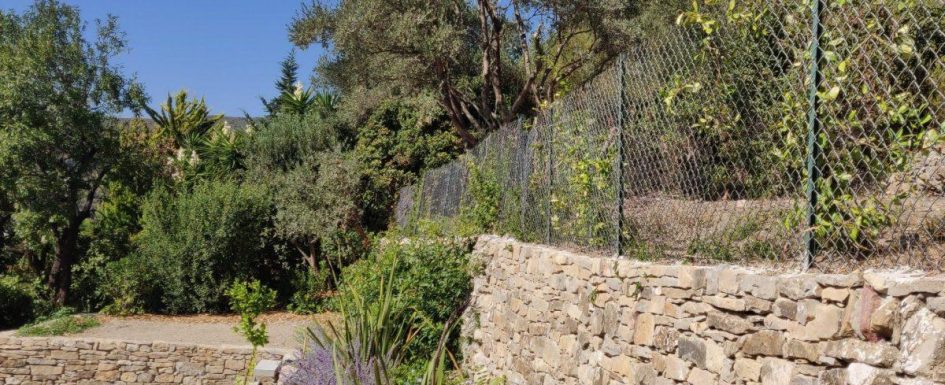
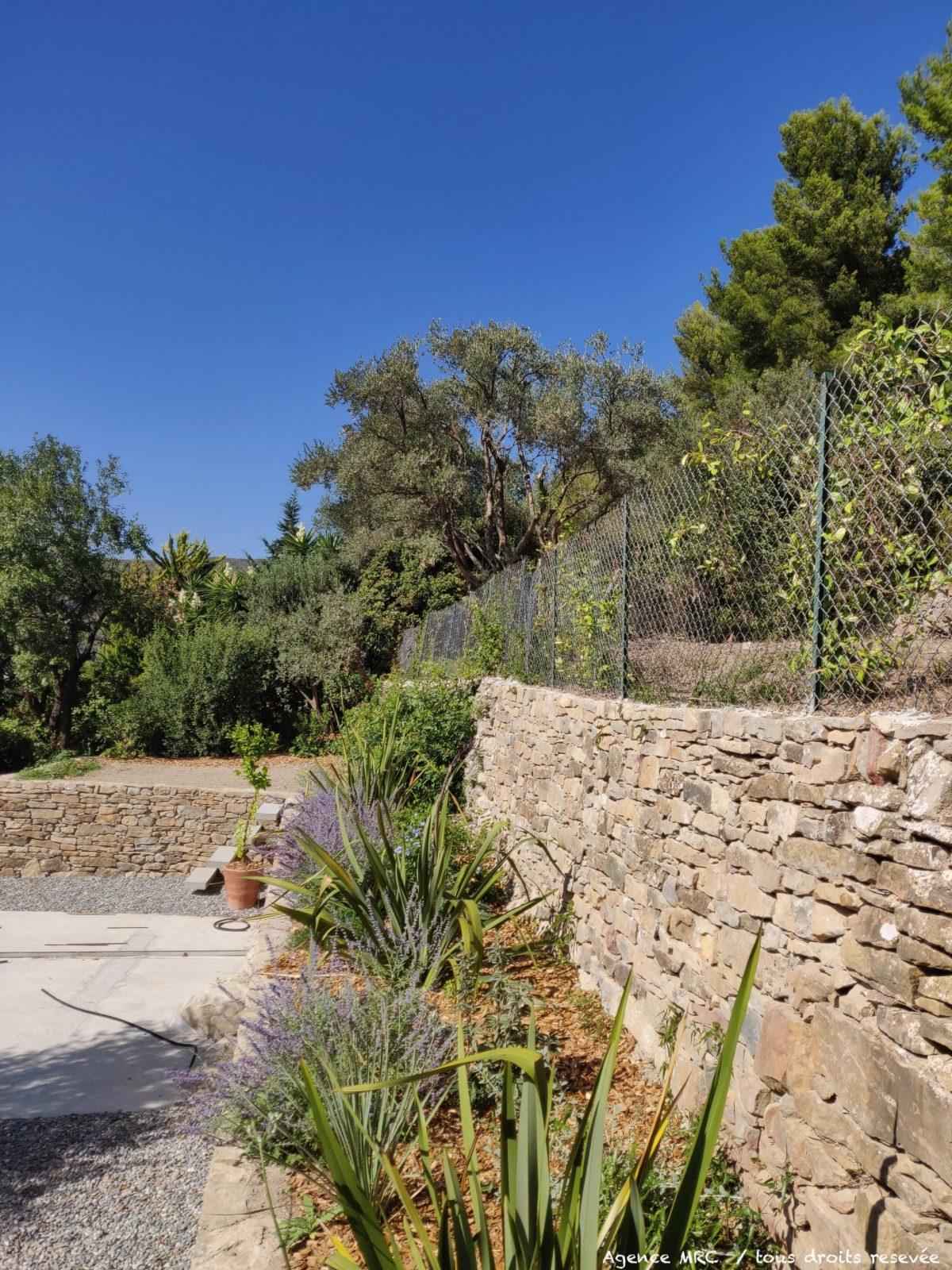
On another sloping site with old dry-stone terraces, we retained olives and other established plants rather than starting again. Rosemary, lavender, sages, gaura, feather-grass types and climbers completed the layers.
Some terraces were widened and access improved through masonry stairs and stone steps. Automatic irrigation supported the establishment of new planting.
The example connects landscape character with practical access. It does not suggest that every retained plant or every named grass should be newly introduced into a different region.
Establishment watering remains essential
A mature drought-tolerant plant is not automatically drought-tolerant in its first year. The initial rooting period can determine whether the planting succeeds.
Use suitable establishment irrigation, then reduce inputs as the plants and conditions permit. Properly adjusted drip or targeted hand watering can be more effective than repeatedly wetting a broad area.
Where appropriate, deeper, less frequent watering encourages a different root environment from small surface applications. The actual schedule must respond to soil, weather and plant condition, not a fixed promise that all dry gardens need the same routine.
Existing aromatics can also provide propagation material where suitable. Our planting and garden articles continue those practical ideas without treating every plant as equally easy to propagate.
Match mulch to the planting
Organic mulch such as shredded material or bark is described with a reference depth around 5 to 10 cm. It decomposes and needs renewal, while contributing organic material to the soil.
Mineral mulch such as gravel or volcanic aggregate lasts differently and can suit some dry, freely draining arrangements, but can also become hotter in sun. It is not automatically the better choice because the garden is water-conscious.
Consider the existing soil, plants, exposure and desired maintenance. Keep the planting’s needs in view rather than choosing a surface only to make every bed look identical.
Irrigate precisely and respect restrictions
A suitable dripline or porous hose at the roots, with an appropriately programmed controller, can target supply. Early morning is the source’s example for limiting evaporation, subject to actual local restrictions and conditions.
Rainwater storage may complement the arrangement where suitable and permitted. Check the actual storage and use requirements rather than treating the tank as a substitute for a water budget or a coherent planting plan.
The French article refers to prefectural drought orders. Those are French administrative measures, not US rules. Check restrictions and permitted irrigation times for the actual location before scheduling watering.
In the 200 m² study, planter drainage, wall weep outlets and mulch were considered together. Volcanic aggregate, pebbles or bark were assigned by zone, helping protect soil while giving the drawing continuity.
Container design matters too. See our garden and planter-planning articles for the relationship between materials, drainage and planting rather than assuming any pot suits any plant.
Keep the garden alive and composed
A dry garden should not look like an abandoned space. Use repeated masses, height changes, evergreen structure, flowering moments and texture to make the arrangement intentional.
The same principles can support Mediterranean, contemporary, naturalistic, graphic or grass-led styles. Routes, terraces and daily uses help determine which expression belongs to the site.
Too much mineral surface can increase heat discomfort. Shade, layered vegetation and functioning soil remain important. The minimalist Mediterranean garden and contemporary garden guides develop different ways to maintain that balance.
Complexity changes the planning needs
Changing a few beds can be gradual. A complete garden redesign involving slopes, retaining structures, circulation, lawn reduction or irrigation needs a more coordinated assessment.
The required design expertise connects soil, climate, water, views, materials, maintenance and seasonality. The aim is not simply to count fewer watering events, but to create a durable and comfortable place.
Before confirming the plan, check the dry and shaded zones, suitable existing vegetation, planting layers and targeted irrigation. Systematic mineralization is not the same as thoughtful water conservation.
A practical check before work begins
Start with the existing vegetation and its condition. Distinguish what is already adapted from what is failing, without assuming every problem is a lack of irrigation. Compaction, poor drainage, uneven supply or inappropriate exposure may be involved.
Then connect each use with an appropriate surface or planting solution. Play and relaxation do not necessarily require the same treatment as a planted bed or the hot strip beside a facade. The 200 m² example shows why options should be compared by zone rather than applied uniformly.
Finally coordinate establishment care and future maintenance. Decide how the soil will be observed, how watering will be adjusted and when mulch will be renewed. The gradual reduction in demand depends on those decisions continuing to work after planting.
Questions about xeriscaping
Does it mean a garden without water?
No. Establishment watering and occasional supplementary irrigation may still be needed. The objective is an appropriate reduction, not a promise of zero care.
Can it remain green and flower-rich?
Yes. Suitable plants, repeated associations and seasonal interest can provide a generous result without copying the water demand of an unsuitable garden.
Which soil is best?
The soil needs to suit the selected plants and be properly understood. Clay, sand, calcareous and compacted ground do not all need the same treatment.
Can an existing garden change gradually?
Yes. Review unnecessary lawn, plant suitability, mulch and watering distribution while retaining useful established vegetation. Improvement does not require clearing the whole site.
Is artificial turf the method’s main solution?
No. It may be considered for a particular heavily used zone, but heat, material and soil consequences remain. Other planted arrangements can be more coherent elsewhere.
What should determine the plant list?
Climate, soil, exposure, role, mature behavior, cold tolerance and local ecological or legal suitability. The same common name can conceal very different species.
Why do several small decisions matter?
Failures often combine compacted soil, absent mulch, poorly distributed water and unsuitable placement. The seven principles work best together rather than as isolated decorative measures.