

Marble is one of the materials that left the strongest mark on Clara AJMAR during her training. On a study trip with her landscape architecture school, she visited the marble works at Carrara. She remembers a kind of vertigo in front of enormous blocks in every color and every size. When the group arrived, craftsmen were finishing a bathroom made entirely of marble. Her first reaction was “too much, kitsch.”
Years and projects later, her view has changed completely. Used well, marble is one of the most refined materials you can bring into a home. The question is not whether to use it, but how, where, and with what. And as with any noble material, the points to check before starting a bathroom renovation apply to choosing marble too.
Solid marble: where it is used, what it costs, and its real constraints
Solid marble is what you see in major projects: countertops, floors, basins, wall cladding. It is also what impresses most at Carrara: raw blocks weighing several tons, one-of-a-kind veining, and a range of colors and textures that no synthetic material truly reproduces. Every piece is unique. That is its strength, and it is also what explains its price.
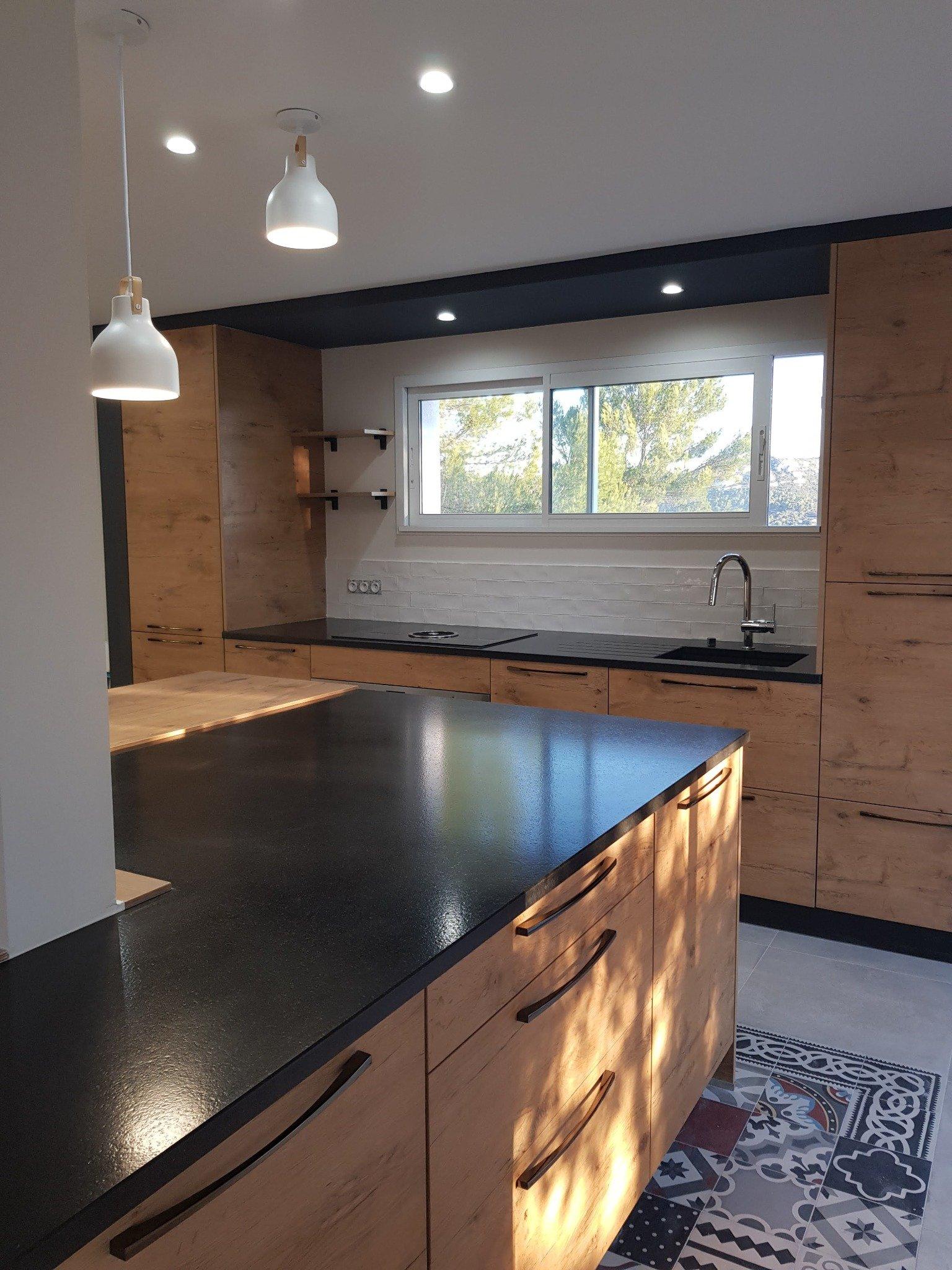
In our projects, solid marble is mainly used for kitchen countertops. That is where it has the most visual impact and where it appears most often, whether classic white marble, black marble, or stones such as Zimbabwe-type granites with golden veining. A cut countertop costs around €400/m² installed in France (indicative price, 2017), depending on thickness and finish. It is a significant investment, justified when the countertop is a central piece of the composition.
A limestone that reacts to acids
Marble is a calcareous stone. It reacts to acids, which leave dull marks, and it scratches more easily than granite or ceramic. The choice therefore concerns the finish as much as the stone itself.
Carrara white, light gray with fine veins, remains the most common. Calacatta is whiter, with bolder veining. Marquina is black veined with white; Emperador is brown. A polished finish is glossy and makes the veins stand out, but acid marks show more. A honed, matte finish is more discreet day to day and less slippery underfoot. A brushed or antiqued finish emphasizes texture. For a countertop, plan on a thickness of 2 or 3 cm (about 3/4 to 1 1/4 in).
Combining marble with other materials
On projects with a tighter budget or long runs of countertop, we often combine marble with other materials: a black marble countertop on the central zone, for example, completed with wood on the returns. This keeps the premium effect without committing the entire budget to a single material. The result is often more interesting visually than uniform marble across the whole kitchen.

Professional tip: before choosing solid marble, ask to see samples in real conditions, laid flat in the light of your own room. The veining of a marble changes completely with orientation and light. What you see in a showroom does not always match the final result at home.
Marble in the kitchen and the bathroom
A marble kitchen countertop is a strong choice. It instantly raises the level of finish and brings a visual presence no other material produces in quite the same way. Paired with pale wood or matte lacquer cabinet fronts, it creates a very effective contrast. The project photo with the central island and the integrated structural column is a good example: the countertop works with the structure instead of hiding it.
In the bathroom, solid marble mainly appears as a vanity top or shower cladding. That is where maintenance becomes central. Marble is porous: it absorbs grease, limescale, and acidic products. With constant humidity and ordinary cleaning products, it can deteriorate quickly if the usual precautions are not taken. It should always be sealed at installation, and the treatment renewed regularly. Clara always explains this constraint to clients early, not to discourage them, but so they know what to expect.
How to protect it in practice
Protection relies on a water- and oil-repellent impregnating sealer, applied at installation and renewed according to use. A simple test tells you when: if a drop of water darkens the stone instead of beading on the surface, the protection needs to be redone.
Day to day, avoid vinegar, lemon, and acidic descalers. Use a pH-neutral soap, and wipe up splashes of toothpaste, perfume, or makeup quickly. For a vanity top, plan the drillings and cutouts with the stonemason at the drawing stage, and choose the basin model according to use. Our advice on bathroom basins helps with that choice.
With marble basins, the result is exceptional, but the matte surface of untreated marble marks easily. For everyday family use, Clara recommends a polished marble basin or one with a water-repellent treatment.
From the field: on a recent project, the client had a limited budget for the countertop. Rather than compromise on marble quality, we limited the marble to the central island and used laminate on the side returns. The result was very clean and the budget under control. The rule: better less marble of good quality than more marble of compromised quality.
See our projects in video
Real floor plans and renovations explained step by step on the ArchiWorking YouTube channel. Watch how spaces are reworked before the works begin.
Marble tiles on floors and walls: the accessible option
Marble tiles are a very interesting alternative to solid slabs. They bring the material into a home at a much lower cost, with fewer maintenance constraints and great freedom of layout. On floors they pair remarkably well with wood, microcement, or terracotta depending on the style. As wall tiles, especially in a bathroom or a kitchen, they bring a richness of texture that standard tiles lack.
What Clara particularly appreciates about marble tiles is how many color palettes they adapt to. With blue, green, black, or wood, they integrate naturally without ever looking forced. They are also timeless: a marble floor laid today will still look elegant in twenty years, which is not true of every trendy tile.
Keeping an existing marble floor
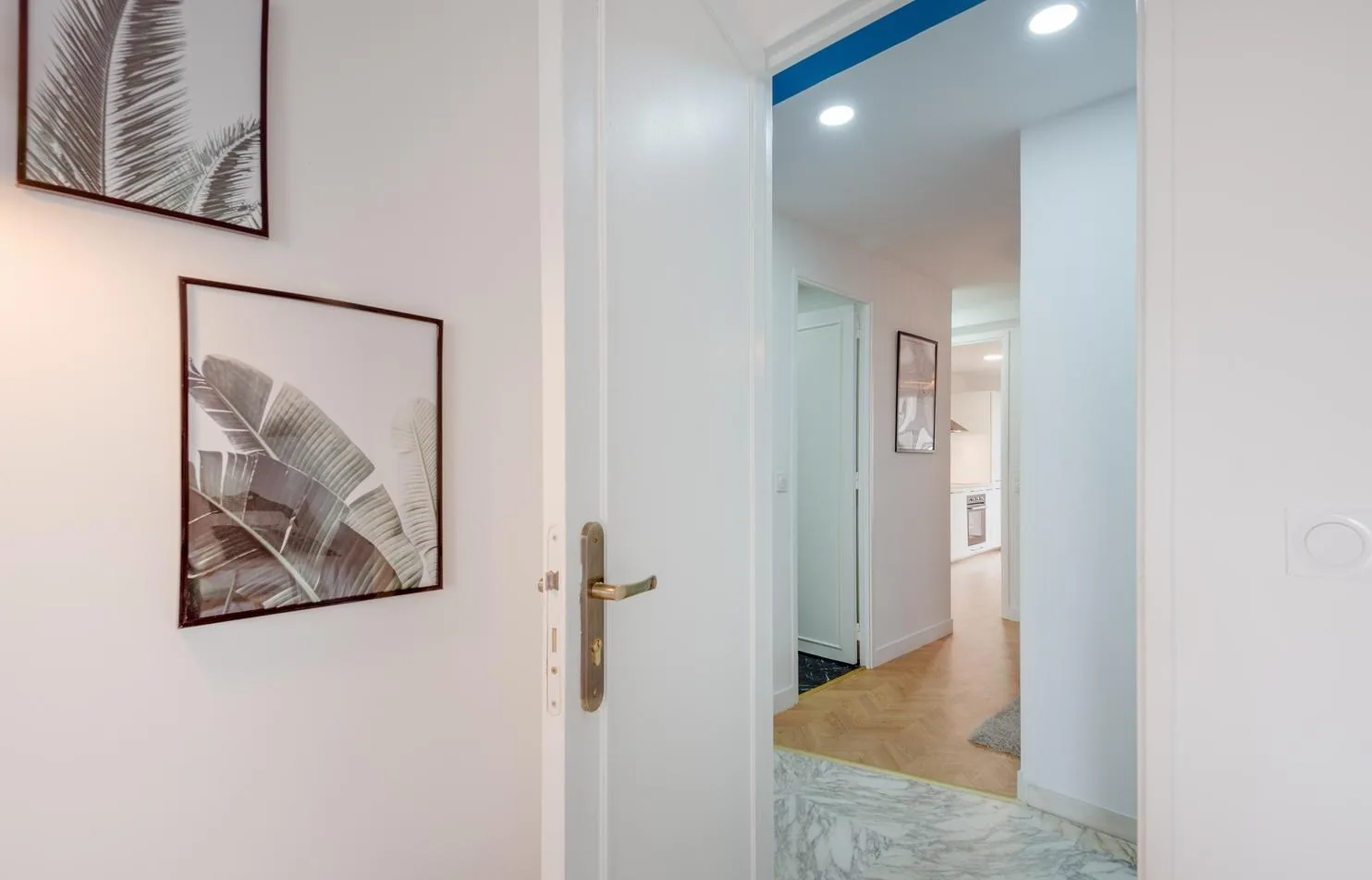
Before choosing a new surface, we also look at what is already there. In the complete renovation of a 75 m² (about 810 sq ft) apartment, we kept a large part of the existing marble floor. Rather than remove it, we integrated it into the new composition, setting it against a wood-look laminate laid in herringbone. The transition between the two materials helps read the spaces, especially between the entrance and the living area. In one of the bedrooms, a new shower room was created with a 90 × 90 cm (about 36 × 36 in) shower and white marble-effect tiles on the walls.
Our approach is that a good-quality existing material should not be replaced simply because it looks dated. Before removing it, we study its condition, the options for keeping it, and how to pair it with contemporary materials. We also distinguish natural marble from marble-effect porcelain, whose technical properties and maintenance are different. The frames in this apartment appear in our article on composing a gallery wall.
Installing marble tiles
Cutting and laying marble tiles requires an experienced tiler. Marble cuts differently from porcelain: it chips more easily, and the joints must be handled with care. Any interior designer includes this point in the installation specifications, because poor workmanship can spoil an otherwise flawless material.
Marble tiles are often sold in 30.5 × 30.5 cm or 61 × 30.5 cm formats (roughly 12 × 12 in or 24 × 12 in), about 1 cm (3/8 in) thick, in a polished or honed finish. On a bathroom floor, a honed or brushed finish reduces slipperiness. Under pale marble, use a white adhesive suited to natural stone, because a gray or overly wet adhesive can stain the stone from below. Joints stay thin, around 2 mm, and the sealer is applied before grouting and again once everything is dry. Installed stone can be sanded and repolished in place if it becomes marked over time.
Alternatives to marble: porcelain and wallpaper
Marble-effect porcelain is the most common solution when natural marble is out of budget. Technical progress in recent years has greatly improved how veins and shades are reproduced. Some high-end porcelain tiles are now very convincing to the naked eye, and far more resistant to stains and moisture than natural marble.
How to compare marble-effect porcelain
Look at the quality of the veining and at how many different faces the series offers, which prevents the same pattern from repeating. Large formats, from 60 × 120 cm (24 × 48 in) up to slabs more than 2.5 m (over 8 ft) tall, reduce the number of joints on walls. Some series are designed to be book-matched, with veins continuing from one slab to the next. A polished finish imitates glossy marble better; a matte finish is safer on floors. For countertops, there are also ceramic and quartz surfaces with a marble look that resist stains better. If you are hesitating with another mineral material, see our guides to terrazzo and microcement.
Clara does not see marble-effect porcelain as a shameful compromise. It is a coherent technical choice in certain contexts: heavy use, difficult maintenance, tight budget. What she advises against is mixing it with natural marble in the same room in the hope that nobody will notice. The difference shows, and the result is often visually uncomfortable.
Marble-effect wallpaper is a decorative option, not a construction material. It can work very well on one wall, behind a bed, or in a hallway, adding a touch of material without the constraints of real stone. The key is not to use it on all four walls: marble is imposing because of its veining and its sheen, and visual overload quickly becomes heavy.
The materials marble works best with
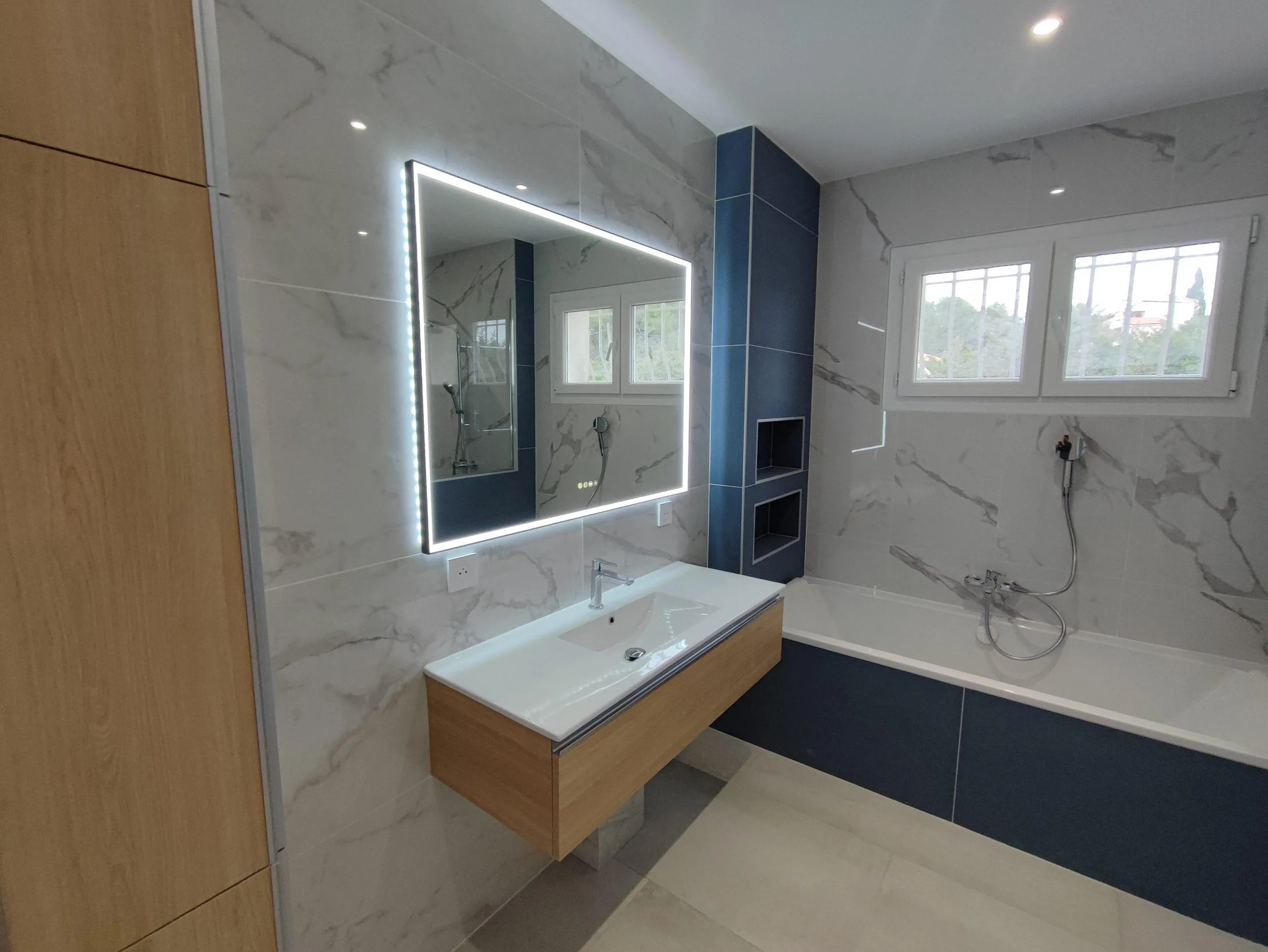
Marble is generous in its pairings and supports many partners without losing its character. Metals are its best allies: copper and brass give it a golden warmth that enhances pale veining, stainless steel makes it more contemporary and industrial, and matte black, in faucets, window frames, or furniture, creates a strong and very effective contrast.
Wood is the other great partner. The wood and marble combination is timeless, balanced, and naturally coherent. Wood brings warmth and organic texture where marble can feel cold. Together they create a home that feels both luxurious and livable, without ever being ostentatious.
Strong colors also work very well: a bottle-green wall, midnight blue, or deep black behind a white marble countertop creates a very graphic composition. This versatility is why marble lasts through decorating trends; it adapts to each period without becoming dated. To take these pairings further, see our articles on brass in interior design and pale wood, two natural partners of marble.
Marble is an investment material. It costs more to buy, needs more care, and requires precautions at installation. But it ages well, gains character over time, and gives a home a level of finish that people recognize immediately. That is why we keep using it, with method and in the right contexts. More real projects and annotated plans are on the ArchiWorking YouTube channel, linked in the box above.
Frequently asked questions about marble in interiors
How much does a marble kitchen countertop cost?
A cut solid marble countertop costs around €400/m² installed in France (indicative price, 2017), depending on thickness, finish, and the type of marble. To control the budget, you can use marble on the central zone or the island and other materials on the side returns.
How do you care for a marble countertop or basin?

Marble is porous and sensitive to acids and grease. Seal it at installation and renew the treatment regularly. Day to day, avoid acidic products such as vinegar or lemon and wipe up splashes quickly. Regular cleaning with a neutral product is enough to keep its appearance over the long term.
Are marble tiles hard to maintain?
They are easier to maintain than solid slabs, because they are usually factory-treated and laid with joints that limit infiltration. On floors or walls they withstand everyday use well. Installation should be entrusted to an experienced tiler, because marble is cut and grouted differently from standard porcelain.
Is marble-effect porcelain a good alternative?
Yes, in some contexts. High-end marble-effect porcelain is now very convincing, more stain-resistant, and less demanding to maintain. It is a coherent choice for heavily used spaces or tight budgets. Avoid mixing porcelain and natural marble in the same room: the difference shows.
Polished or honed marble: which should you choose?
Polished marble is glossy and makes the veins stand out, but acid marks and scratches show more, and it is slippery underfoot when wet. Honed marble is matte and more discreet day to day, better suited to a bathroom floor or a heavily used countertop.
How can you tell real marble from marble-effect porcelain?
Look at the edge. On glazed porcelain, the pattern stops at the surface and the body is plain, while marble veins run through the stone. Marble also feels colder and heavier, and every piece is different, whereas a porcelain series repeats a limited number of designs.