
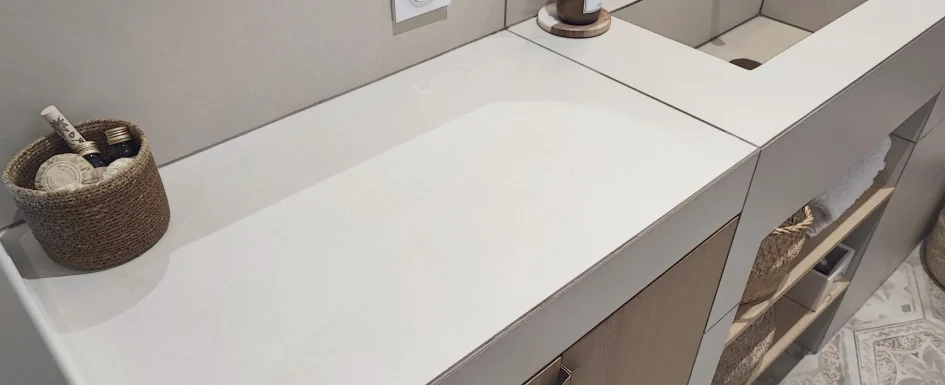
A bathroom basin is one of the room’s central decisions, alongside the finishes and the shower or tub. It has to look right, work comfortably, and remain easy to maintain through years of water, scale, splashes, and occasional impacts. Choosing it from a photograph alone leaves out much of what determines daily satisfaction.
In this account, updated in March 2026, Mathieu draws on renovation experience to compare installation types, materials, taps, and furniture. The best sequence is to choose those elements together, before plumbing locations and finished surfaces make changes expensive. For the wider process, see planning a bathroom renovation.
Begin with use, cleaning, and the available space
A basin is used several times a day, often by different family members. Recessed corners, complex curves, or strongly textured surfaces can collect deposits and make a quick wipe insufficient. A simpler form may be easier to keep clean over a ten- to twenty-year period.
Size matters just as much. A tiny bowl can be frustrating in a family bathroom, while a large projecting basin can obstruct a compact room and increase the chance of bumping into it. Assess the door swing, neighboring fittings, lateral clearance, and the height and position of the tap before buying.
For two users, the source treats 120 cm of overall width as a minimum starting point and around 140 cm as more comfortable. Check the actual bowls and elbow room, not only the cabinet’s advertised width. A well-sized single basin can be more practical than a cramped double arrangement.
Measure the room as it will be used, with doors and drawers open where relevant. A fitting that appears to fit on a plan may still make movement awkward. For particularly constrained layouts, see planning a mini bathroom rather than assuming a standard vanity unit is the only solution.
Understand the installation type rather than ranking appearances
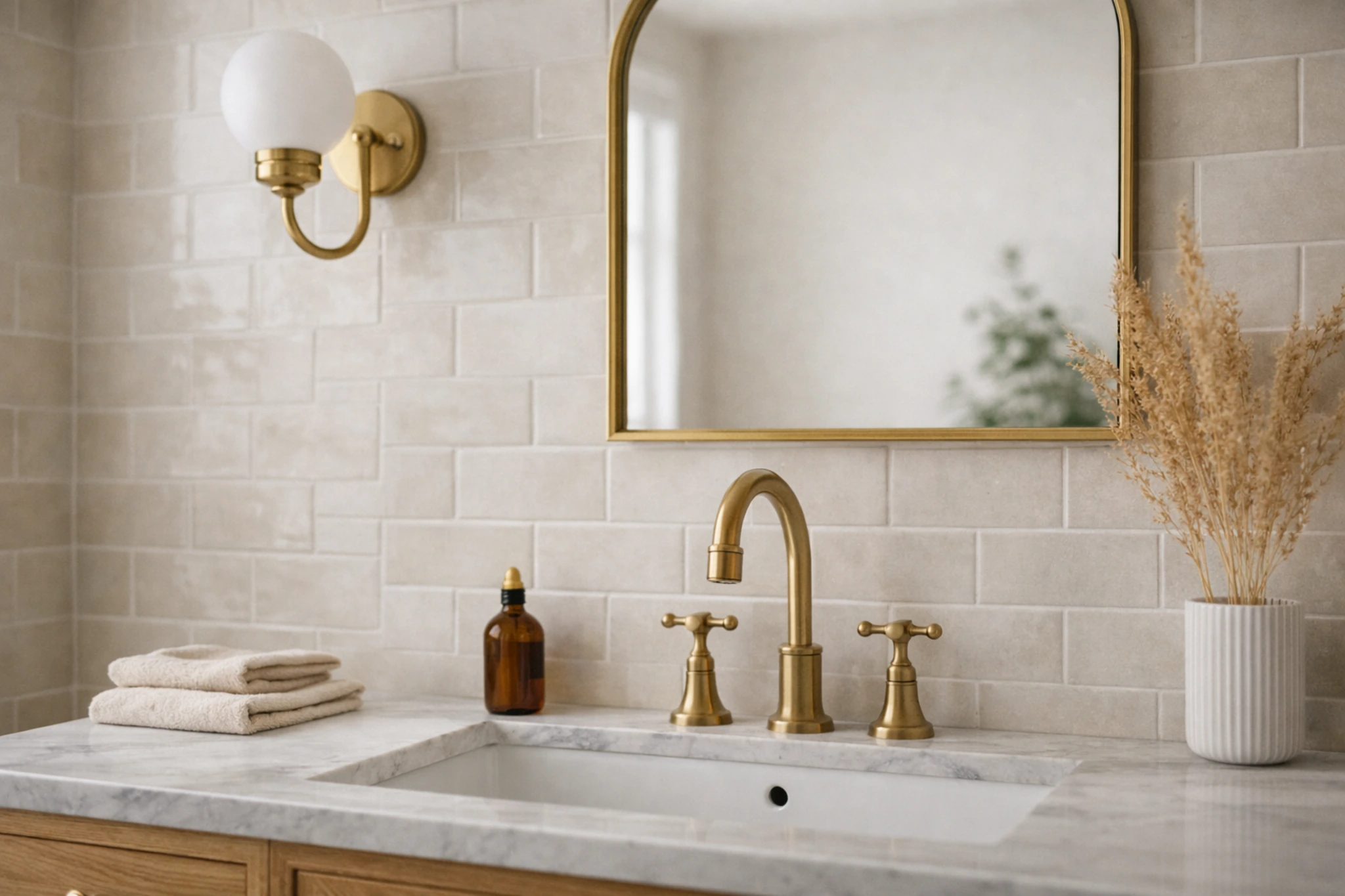
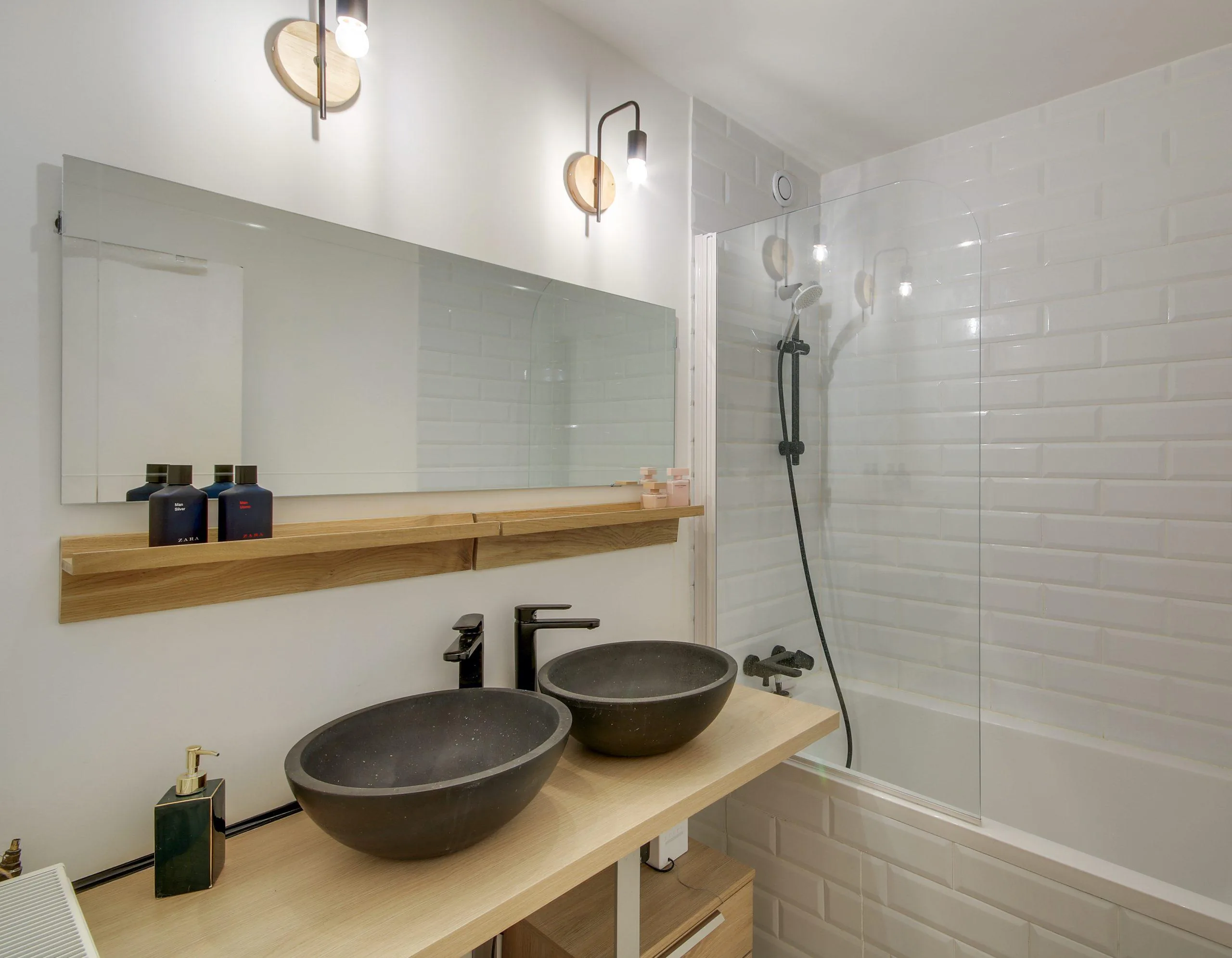
A countertop vessel basin sits visibly above the work surface. That volume can be attractive, and sufficiently high sides may help contain water. Splashing nevertheless depends on bowl geometry and tap alignment, not simply on the basin being raised.
The contact between bowl and top is an important maintenance detail. Poorly installed or deteriorated seals can let water migrate underneath, where it may damage a vulnerable worktop without being noticed immediately. Inspect the joint at handover and continue checking it in use; a clean-looking visible surface does not prove that the underside remains dry.
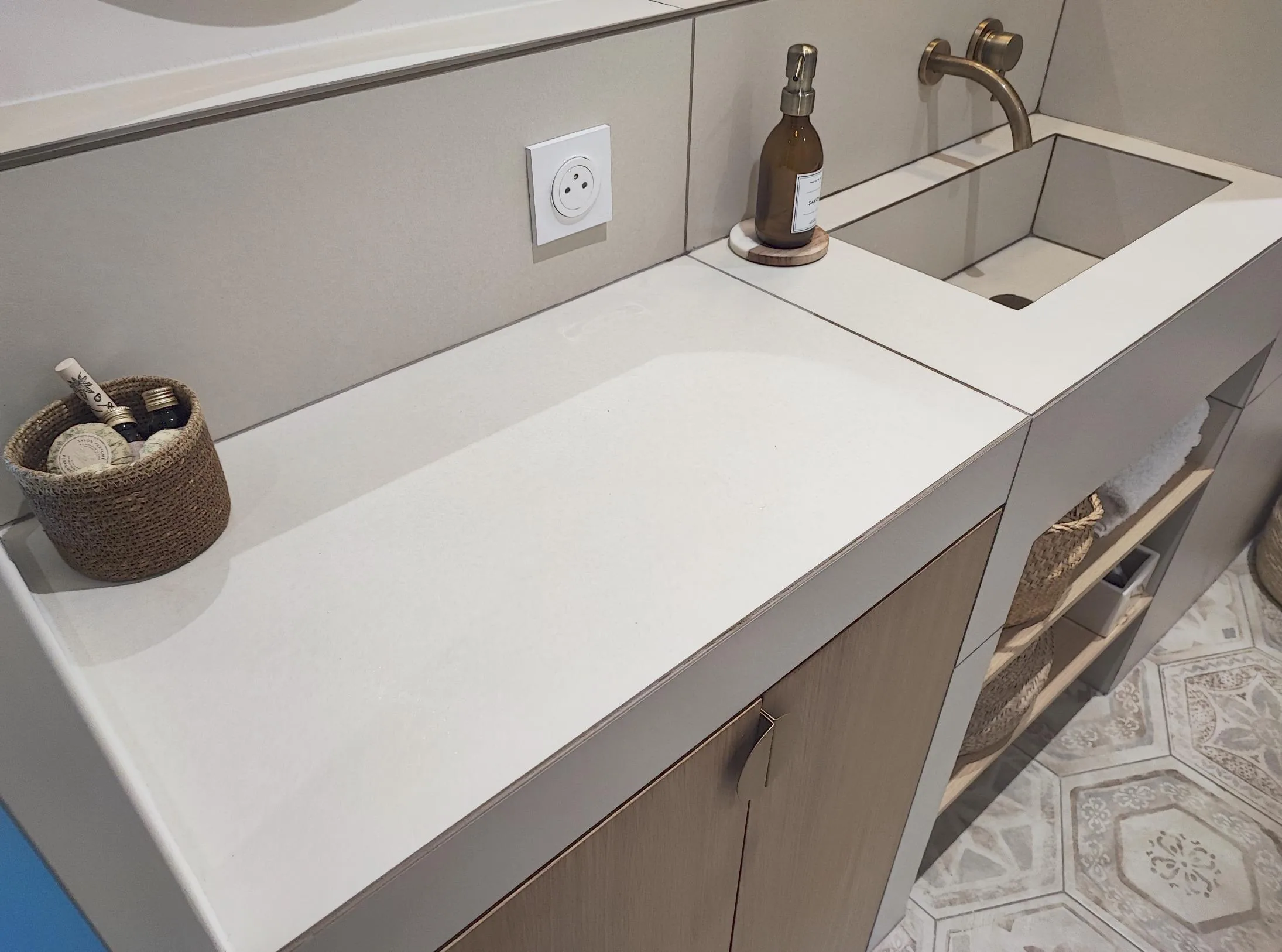
The source groups recessed and integrated basins together, but the distinction is useful. A one-piece integrated basin and top has no separate rim joint, which simplifies wiping. A separately inset or undermounted bowl still has a junction that must be detailed and maintained correctly. Do not assume every product described as recessed is seamless.
Ceramic and resin-based integrated tops are common options. Their shape can make cleaning straightforward, but water may still splash onto the surrounding surface. The top’s material and protective finish need to suit that exposure. Larger products may also require specified reinforcement or support.
Mathieu recalls a 120 cm basin that developed a small crack when the client leaned toward the mirror. A manufacturing defect was addressed, and the episode reinforced the importance of checking the manufacturer’s support requirements. Do not infer that reinforcement makes a basin safe to stand or lean heavily on; installation must follow the product’s load and support instructions.
Semi-recessed and wall-hung options can help in small rooms, although they are not identical. Wall-hung fittings free the view of the floor and can ease cleaning beneath, while semi-recessed bowls may work with a shallower unit. The structural fixings, plumbing, and usable storage must be checked for the actual arrangement.
Match the material to the care you will accept
The historical source range runs from about 150 EUR for a standard ceramic basin to 3,000 EUR or more for premium natural stone, blown glass, or composites. It also contrasts some well-finished 300 EUR products with less convincing 800 EUR ones. Those figures illustrate why price alone is not a quality assessment; they are not current quotations or ArchiWorking service prices.
Note: prices are indicative, based on projects in France in 2017, and vary by project, region and finish.
Ceramic is a common choice because it is robust and usually straightforward to maintain, with many shapes and sizes available. Resin allows flexible forms but may scratch if abrasive products are used. Verify the cleaning instructions and repair limitations for the particular material.
Natural stone and terrazzo can be beautiful, but generally need material-specific cleaning and appropriate protective treatment. Sealing intervals depend on the product and use. Tempered or blown-glass basins create another visual effect, while still requiring care around impacts and edges. None should be selected without considering the household’s habits.
Include the worktop, tap, waste fitting, supports, and any necessary installation changes in the overall comparison. A bowl’s shelf price is not the complete cost of a functioning basin area. Maintenance and the compatibility of all the parts belong in that decision too.
See our projects in video
Real floor plans and renovations explained step by step on the ArchiWorking YouTube channel. Watch how spaces are reworked before the works begin.
Choose the tap at the same time
The tap is not a finishing accessory to be selected after the basin. Some products have a specific tap-hole arrangement; others need a tall deck-mounted tap or a wall-mounted one. A concealed wall fitting can determine supply locations before plumbing and tiling, so changing the decision afterward may be costly.
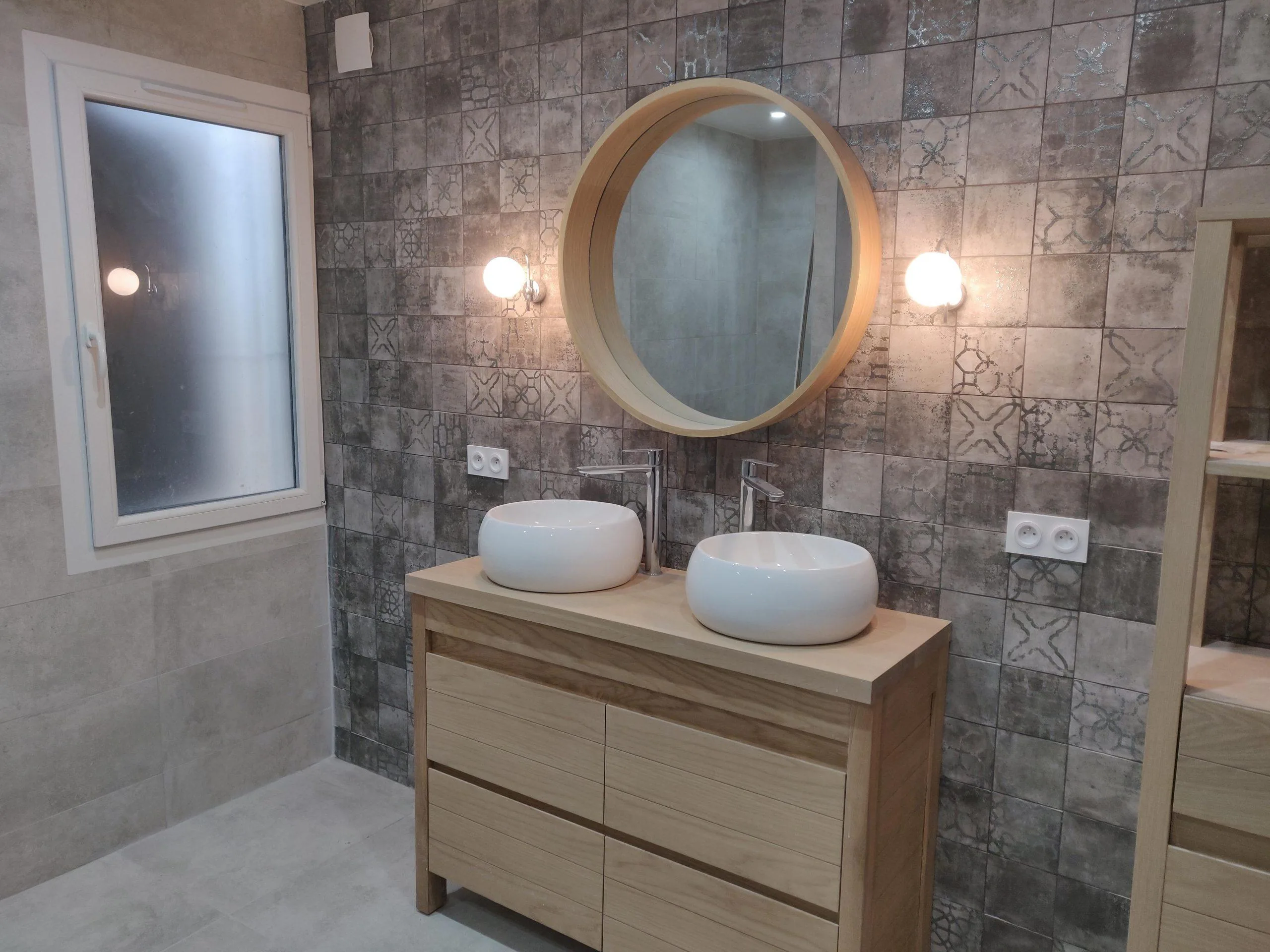
Check spout reach and outlet height against the bowl, not just the finish. The combination should deliver water where it can be used without unnecessary splashing. Vessel height, worktop level, and user comfort need to be considered together rather than measured as separate products.
Water quality affects how finishes look between cleanings. White and bright chrome can show marks and deposits; on matte black, white limescale is often particularly conspicuous. This does not rule black out, but it makes an honest maintenance discussion important.
Brushed brass or matte stainless-steel appearances may be more forgiving visually than glossy white or black in some homes. The exact coating and permitted cleaners still matter. No finish removes scale from the water or provides a miraculous exemption from cleaning, so follow the supplier’s instructions rather than scrubbing a delicate coating aggressively.
The source frames this as a decision that influences comfort over ten years. Match the tap to both the water conditions and the real cleaning routine, not only to the trend visible in a showroom.
Let an awkward room suggest a better worktop
A vanity cabinet is not always possible or desirable. In one narrow bathroom, no standard unit fitted the available geometry. The solution was a basin without conventional furniture, supported on a treated solid-timber top cut to suit the room’s angles.
That constraint produced a distinctive result rather than a visibly compromised standard installation. The timber surface gave the room character while preserving the available circulation. It still required a suitable protective system and careful detailing around the basin and wall.
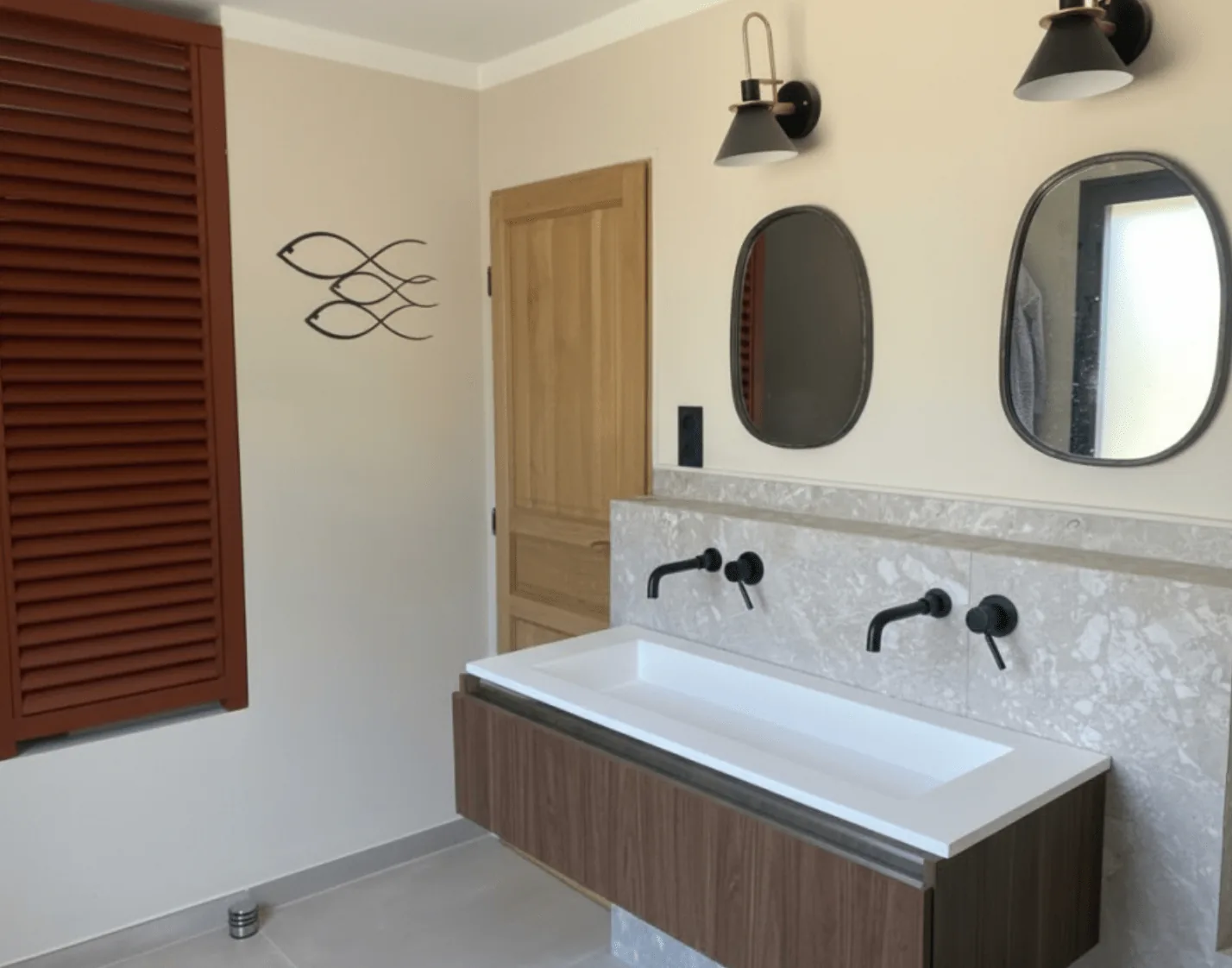
Worktops can also use appropriate marble, other stone, resin, or laminate depending on the budget and design. The important point is suitability for repeated bathroom wetting, not an assumption that every version of a material performs alike. Pay attention to exposed edges, cutouts, joints, and the areas where water may stand.
The source warns that a seal can dry or crack after a couple of years and allow hidden damage. That is a reason for inspection, not a universal two-year replacement interval. Repair failing seals and investigate moisture before the substrate or cabinet structure deteriorates.
Refresh what is sound rather than automatically starting again
A bathroom does not always need demolition. If the plumbing is sound and compatible, and the existing cabinet structure remains dry and stable, changing the basin or cabinet fronts may be enough to update the appearance. Confirm dimensions and connections before assuming a new product will fit unchanged.
Some cabinet systems offer replacement fronts in timber, matte lacquer, or laminate and a wide range of colors. Compatibility with the existing carcass, hinges, and drawer hardware must be verified; not every nominally standard front is interchangeable.
A coordinated basin, tap, and front replacement can transform the room without removing the tile or rerouting every pipe. Conversely, a damaged carcass or poor plumbing should not be concealed under attractive new finishes. The lighter approach works when the retained parts are genuinely suitable.
The source anticipates a well-selected and properly installed basin area serving for fifteen to twenty years. That is a long-term design intention, not a guaranteed lifespan for every product. Material quality, installation, water conditions, and care all affect the result. The complete renovation video retained with the article shows how these decisions connect from design to handover.
Questions before ordering
Is a vessel basin harder to maintain?
It introduces an exposed junction with the top that needs careful sealing and inspection. A seamless integrated top can be easier to wipe, but a separate recessed basin also has a joint. Compare the actual assembly, not just the installation label.
Is a double basin always better for a family?
No. The source starts at 120 cm and favors around 140 cm for comfortable shared use. Below a workable width, a generous single basin may function better than two cramped bowls.
Can I keep the existing plumbing?
Possibly, if it is sound and the replacement’s dimensions, waste, and tap arrangement are compatible. Check before ordering. A wall-mounted tap or a substantially different basin position may require work that a simple visual refresh would not.