
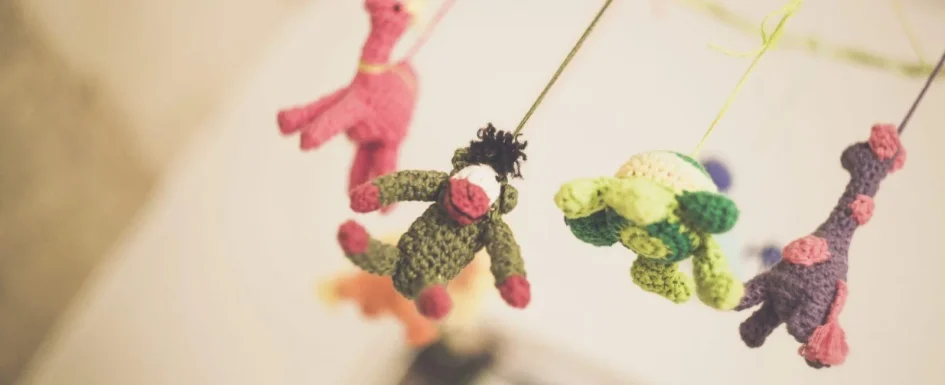
An animal-inspired bedroom needs a few convincing choices, not a creature on every surface. Savannah animals, farmyard figures, pandas, dinosaurs, and imaginary creatures can all give a room character. Think of them as visual markers: a focal point, a color reference, or a useful hook, rather than simply adding more toys to the floor.
The original idea began with savannah animals but expanded to a broader bestiary because the design principle is the same. A clear story, selective reuse, and a flexible background make the room personal without making it difficult to update. Our adventure-inspired children's bedroom article develops the relationship between imagination and a practical layout.
Separate the lasting room from its changing story
Wardrobes, shelves, lighting, and the bed arrangement should work for several years. Pictures, textiles, figures, and wallpaper can follow the child’s changing interests. Make that distinction first, then decide whether the room suggests jungle, forest, ocean, dinosaurs, or savannah. One or two focal points and two or three dominant materials are easier to manage than an all-over theme.
A picture wall, a group of hooks, or a reinterpreted animal-head decoration can anchor the idea. Wood, linen, wool, and paper add nature-related texture without repeating animal prints everywhere. A particularly busy pattern is usually best confined to one wall or a textile, leaving somewhere for the eye to rest.
Choose the supports carefully. Nonwoven wallpaper is generally easier to hang and remove than traditional paper, and a washable version is more practical around hands and drawing materials. Repositionable stickers let you test a composition before committing. For bedding, curtains, and cushions, OEKO-TEX Standard 100 provides tested limits for harmful substances; check certification for the product itself.
A washable, short-pile rug with an anti-slip backing suits floor play better than a loose, hard-to-clean model. An animal-shaped night-light or lamp also needs appropriate product safety documentation. The European context in the source calls for CE marking; this is not a universal independent certification. A rechargeable light should not become hot to the touch, and its instructions and suitability for children need checking.
Real examples: personality without replacing the storage
In a family renovation, two children’s bedrooms combined custom wardrobes, shelving, and sleeping areas with decoration that could change. In the first, pale-wood side panels frame a large bed niche with decorative wallpaper and two wall lights. A plasterboard lining prepared the surface and concealed the electrical supplies.
Two shelves below the air-conditioning unit were positioned to remain useful when the child’s bed is replaced with a larger one. In the second room, light-blue and dark-blue wardrobe fronts relate to wood shelves and plant-pattern wallpaper. Storage is organized for clothes, toys, books, and school supplies rather than relying on a collection of small unrelated units.
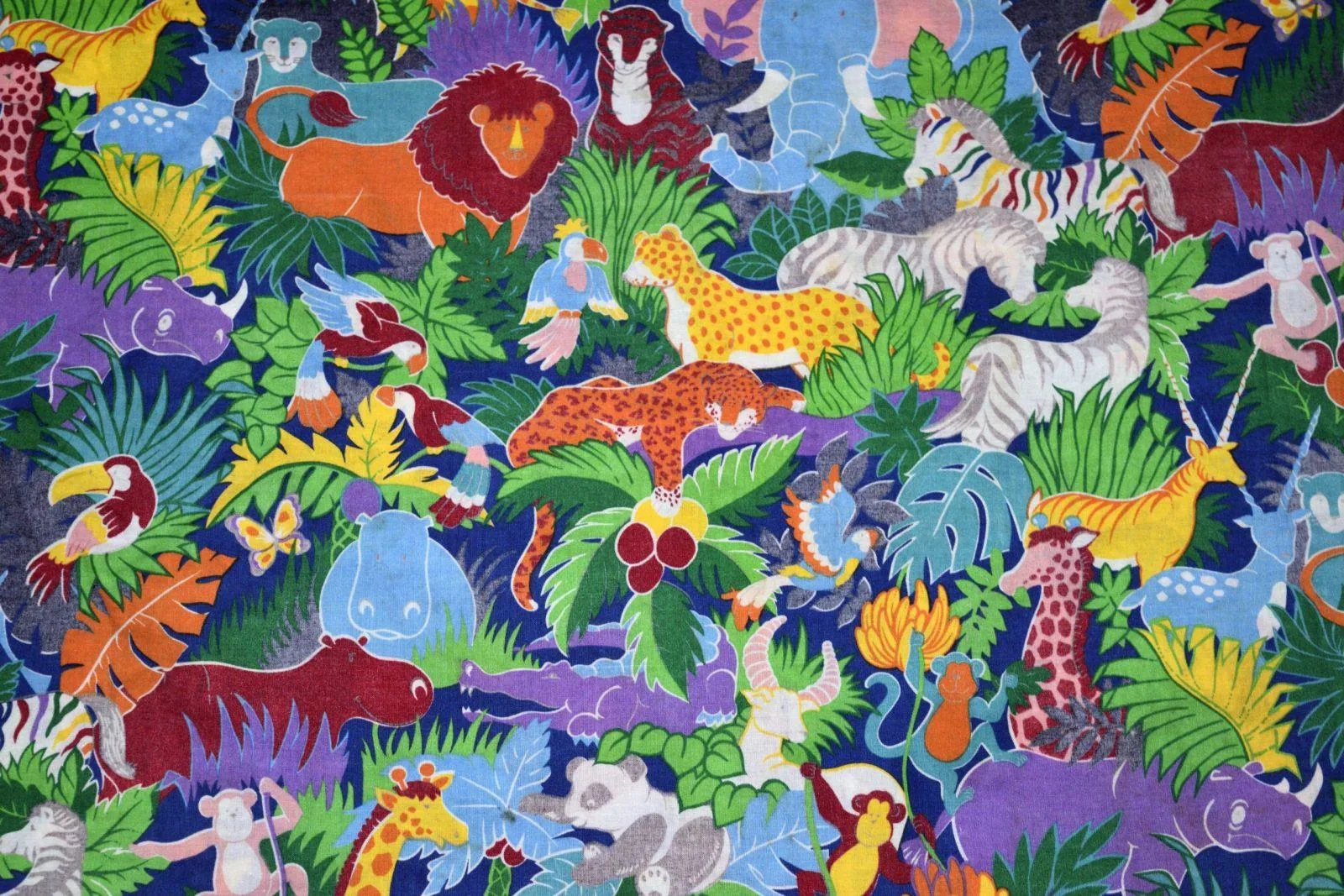
The wallpaper carries the decorative story; the furniture retains its function. Apply the same method to an animal theme. A new set of illustrations or bedding can alter the room’s personality without rebuilding the wardrobe, moving electrical wiring, or discarding a useful bookcase.
Upcycling: turn existing objects into a coherent collection
Forgotten plastic animals can become a small creative project rather than more clutter. Matching matte paint can bring a mismatched group together as a deliberate collection. Chalk white, terracotta, or matte black can provide unity, or a consistent theme can do the same job without repainting everything.
One option is a furniture pull formed from a rigid figure secured with a threaded rod. Another is a handmade hook or decorative wall piece that releases floor space for play. Involving a child in age-appropriate creative stages can strengthen their connection with the room and encourage participation, while adults remain responsible for tools, coatings, and installation.
Do not treat the craft idea as automatically safe hardware. A glued or poorly tightened figure can detach; ears, horns, and tails can break into small choking hazards. Reserve these handles for older children who no longer mouth objects, or for locations outside younger children’s reach. Use solid, rigid pieces with a through-threaded fixing rather than adhesive alone, and regularly check the tightening and condition.
For repainting plastic, light sanding and a compatible adhesion primer are important. The French source favors A+ indoor-emissions labeling and, for objects handled daily, a coating compliant with NF EN 71-3, the toy-safety reference for migration of certain elements. Those coating references do not certify the entire homemade object as safe. Consider the full assembly, sharp projections, and the child’s behavior before using it.
See our projects in video
Real floor plans and renovations explained step by step on the ArchiWorking YouTube channel. Watch how spaces are reworked before the works begin.
Fixings: identify the wall before choosing an anchor
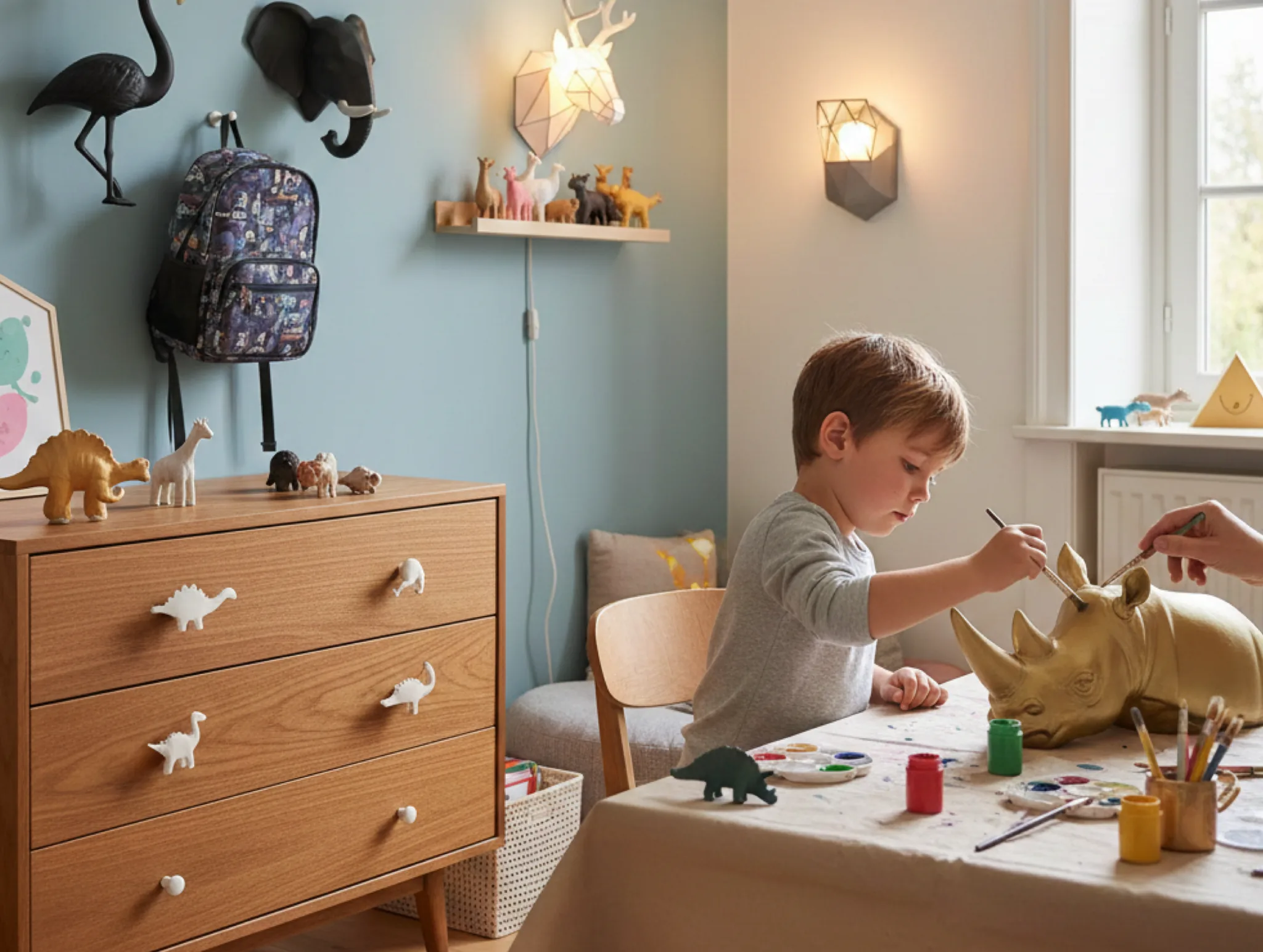
Animal hooks may carry coats and schoolbags, and a child may try to hang from them. A randomly chosen screw and plug is not a design method. Determine whether the support is concrete, solid or hollow masonry, or plasterboard, then select the fixing for the actual substrate and load within the manufacturer’s permitted values.
The source gives examples such as a suitable metal anchor in concrete, an approved resin fixing with a mesh sleeve in hollow masonry, or fastening into a stud or reinforcement rather than relying on plasterboard alone. These are substrate-dependent examples, not interchangeable instructions for every wall. Have the construction checked if you cannot identify it, especially for heavy items or anything mounted overhead.
Secure wardrobes, chests of drawers, and climbable furniture to the wall with appropriate anti-tip brackets. Concealed fixings can preserve the appearance without sacrificing stability. Freestanding elements may also need reinforcement or manufacturer-approved stabilization; ballast is not a substitute for a required wall anchor. Preventing pull-out and overturning is the foundation of the design, not an optional final detail.
Use height to balance autonomy and protection
Place everyday hooks and accessible storage at the child’s scale. The source gives approximately 80 to 110 cm above the floor as a starting range, to be adjusted to the user’s height. The purpose is to let the child put things away without help, not to install all fittings at one fixed measurement.
Purely decorative animal pieces can sit higher, around 150 cm in the source example, within the visual composition but outside reach. Check the actual child’s reach and ensure nothing protrudes into circulation. Higher placement does not remove the need for secure fixing, especially above a bed or play area.
Animal graphics can work beyond a child’s bedroom
The same selective approach can give a contemporary living space personality. A reworked animal-head decoration or an organic light fitting can create a deliberate surprise without spreading a motif across every finish. Keep either a clear thematic link or a strong color relationship so the pieces read as a collection rather than leftovers.
In an older 110 m² apartment with four bedrooms, we used animal representations in the entrance hall, which also held the dining space. Decorative wallpaper and wall moldings painted bright yellow, Tollens CR4033-6 Citronnade, established the setting. A three-bulb pendant and two green wall lights illuminated it; a white chest of drawers supplied storage without crowding the route through.
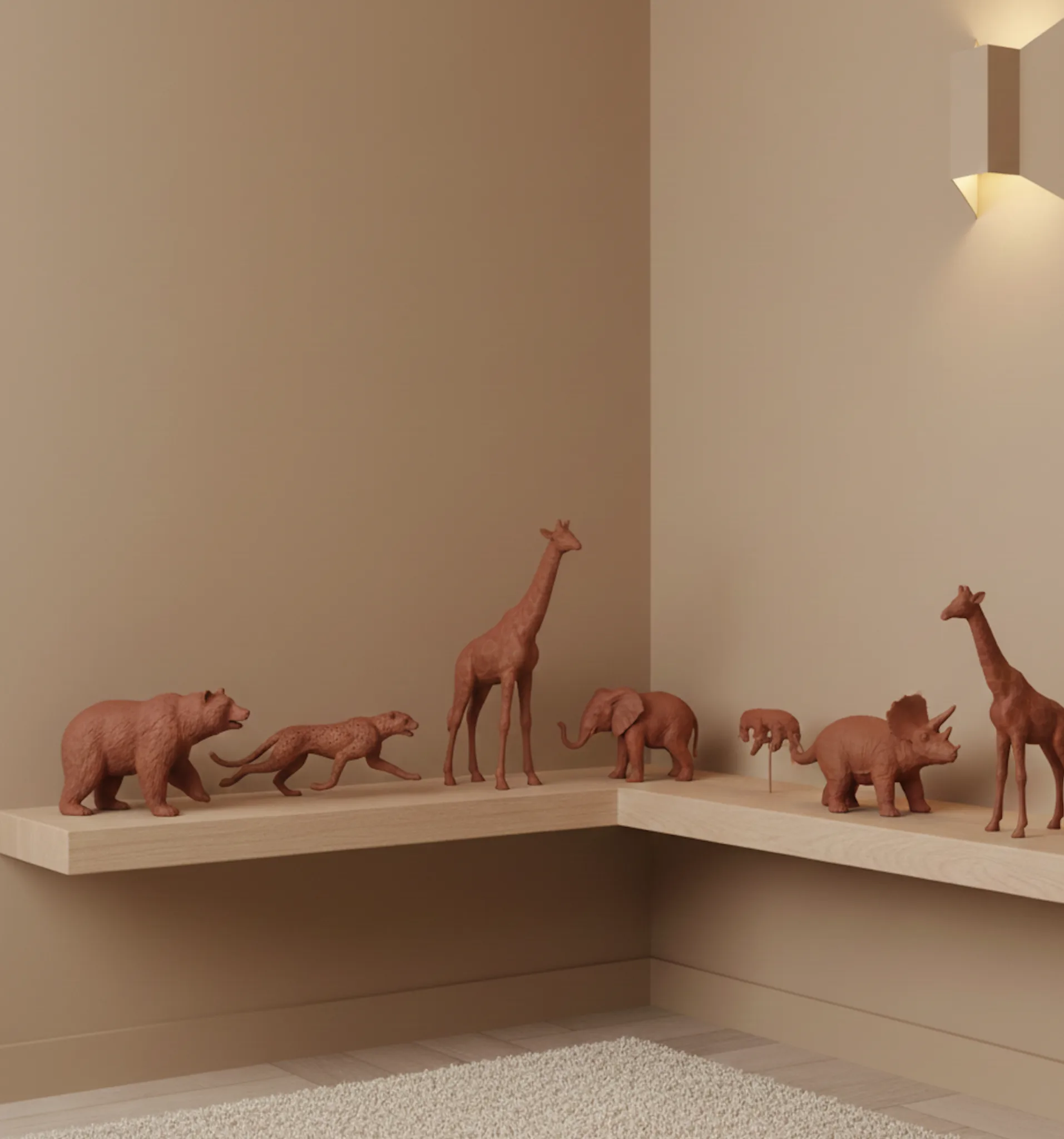
There, animals were graphic accents within a controlled palette, not a repeated print on every surface. It is the same lesson for a child’s room: a few strong elements, durable functional furniture, and room for the story to change.
What fixings should animal hooks use?
Match them to the wall, real load, and fixing manufacturer’s limits. Concrete, hollow masonry, and plasterboard require different solutions; substantial loads may need a stud, reinforcement, or a specifically approved anchor system. Identify the support before drilling.
How do I prevent furniture tipping?
Secure wardrobes and drawers with suitable wall brackets and follow the furniture manufacturer’s installation guidance. Playful handles can encourage climbing, so they do not reduce the need for anti-tip protection.
What heights support independence?
Around 80 to 110 cm is the source’s guide for hooks and accessible storage, adjusted to the child. Decorative pieces can be higher, around 150 cm, provided they are genuinely out of reach, securely fixed, and clear of movement routes.
Are figure-shaped pulls suitable for toddlers?
Not while a child still mouths objects. Detachable figures or small broken parts create choking risks. Reserve them for older users or inaccessible locations, use a through-threaded fixing, and inspect regularly.