
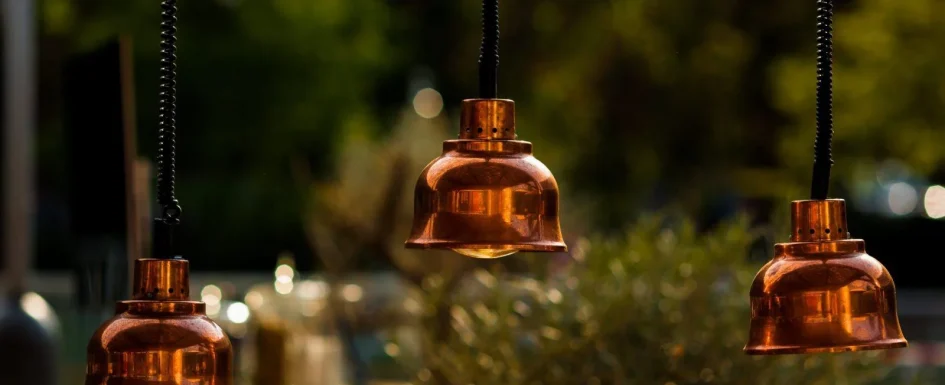
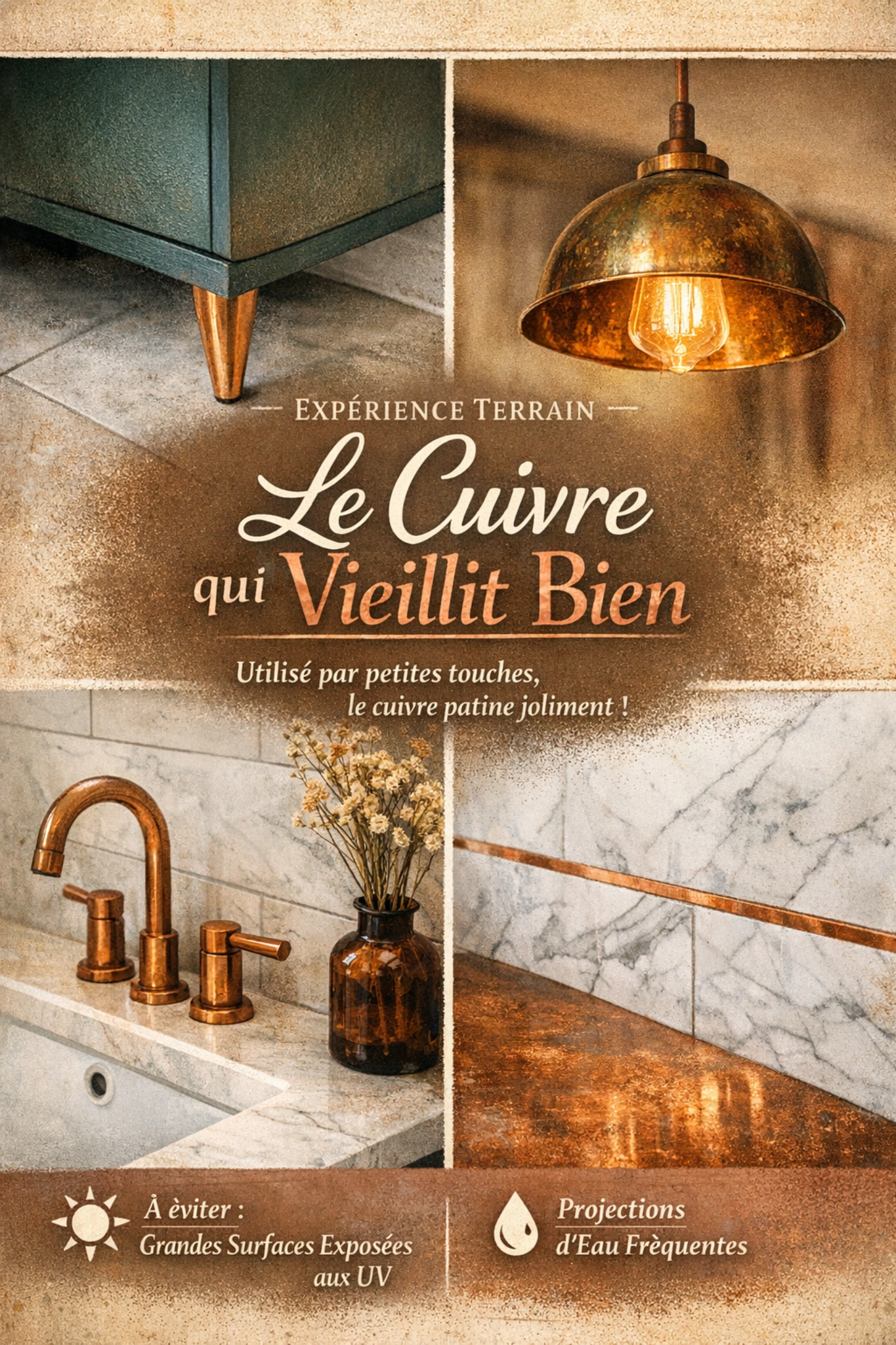
A faucet, a pendant or a cabinet handle can introduce copper tones without turning a room into a display of metal. The interest lies in reflection and contrast: a small warm-colored detail can give an otherwise restrained composition a focal point.
That warmth is visual, not heat produced by the material. Copper also needs distinguishing from a copper-colored or rose-gold finish, whose appearance does not tell you the underlying metal or maintenance requirements.
Start with the surfaces around it
Raw concrete, dark wood, midnight blue, emerald green and matte black can bring out copper’s reddish reflections. The orange-color article offers another way to consider warm tones within a wider palette.
The effect changes with light and scale. One fitting against a quiet background is different from covering a whole wall, even when the finish is identical.
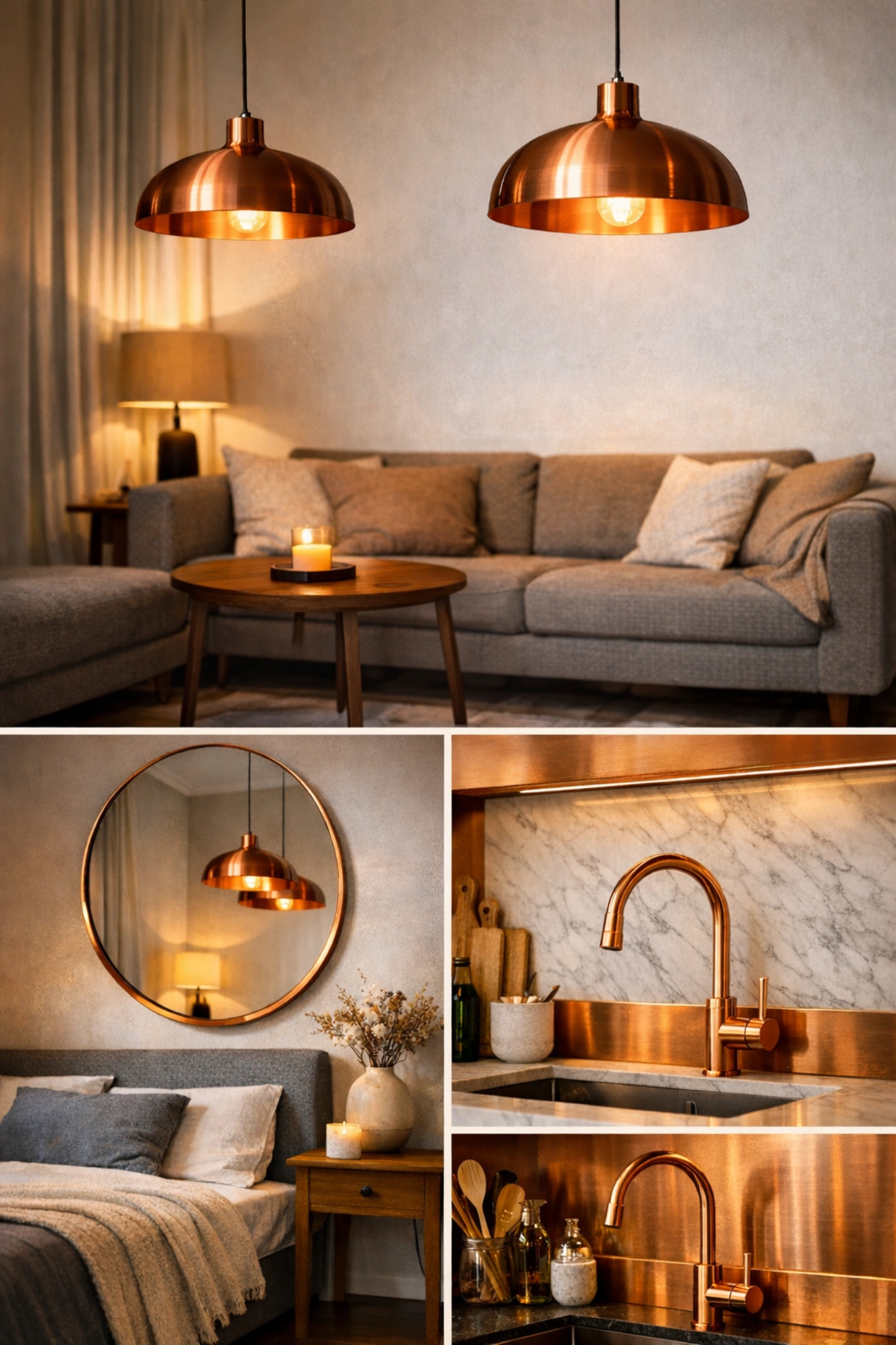
The source also imagines a copper-colored treatment on an old cast-iron radiator. That would require a coating approved for the actual appliance and temperature, not an assumption that any decorative metallic paint is safe.
A real kitchen: concentrate the metal in one finish
The video follows the complete renovation of a French T4 apartment, meaning four principal rooms rather than four bedrooms. The kitchen was originally closed off, dark and impractical.
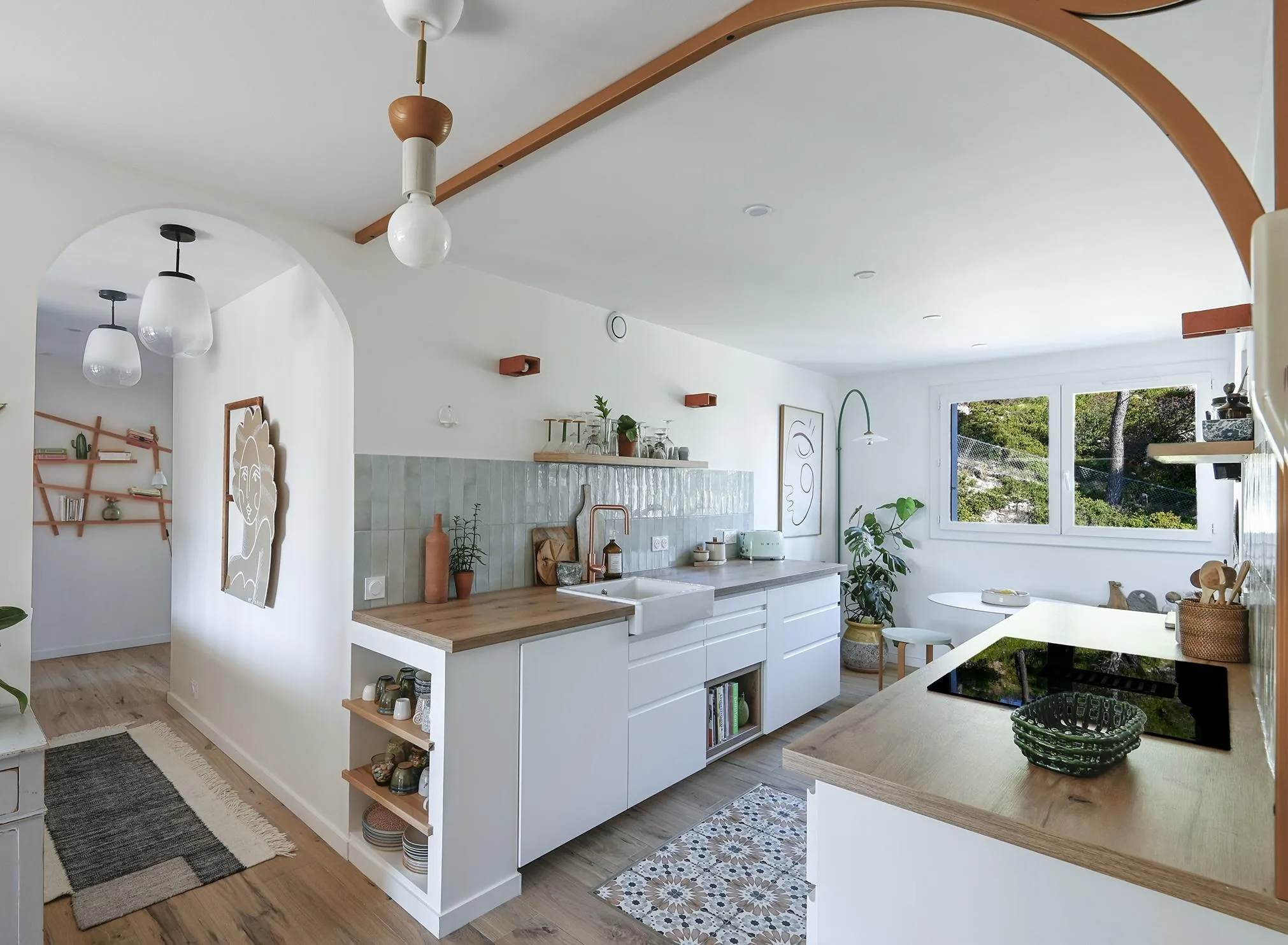
Opening part of the partitions toward the living room improved the routes and access to light. In the redesigned galley kitchen, the copper-colored finish was concentrated on the faucet above the farmhouse-style sink.
A pale wood countertop supplied warmth, while sage-green zellige installed vertically contrasted with the metal. A terracotta wall light and a custom curved slatted screen helped organize the space without closing off the light.
That faucet has a copper-colored finish, not necessarily solid copper. Its resistance to moisture, scratches and cleaning products depends on its surface treatment.
The photograph preserves the actual kitchen, including the parallel runs and curved screen. For related layout ideas, see the kitchen article rather than treating the faucet as an isolated purchase.
Choose the role before adding more objects
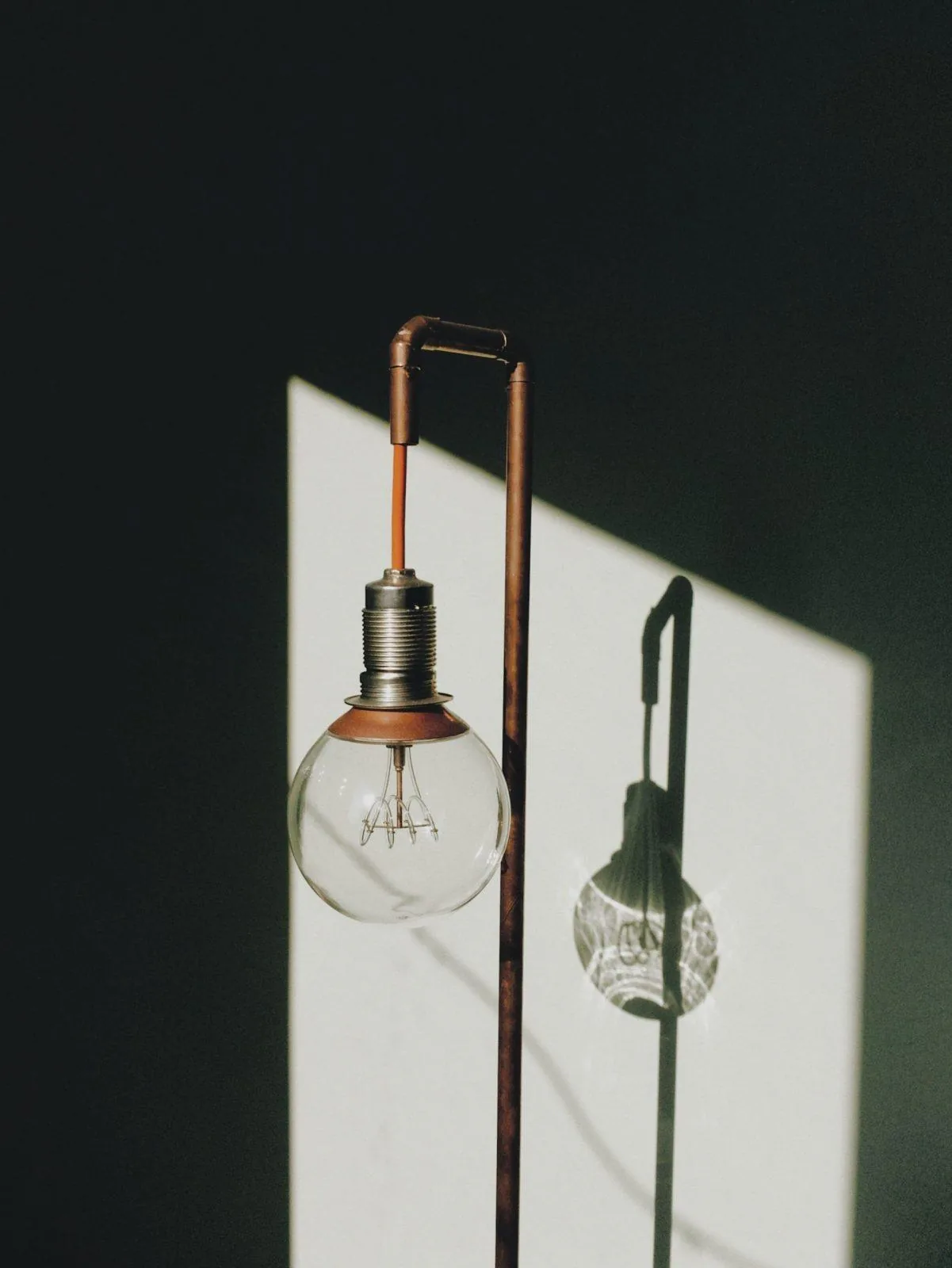
A pendant or table lamp can introduce a concentrated metallic reflection in a living room. The light source and shade design determine the lighting effect; copper alone does not guarantee a soft glow.
A thin mirror frame can work as a smaller bedroom accent. A backsplash or faucet emphasizes the kitchen’s lines, while furniture feet, handles and tile trim offer more discreet repetitions.
The source’s suggestion of 2 or 3 accents is a composition aid, not an absolute limit. First decide what should draw the eye, then use repetition only where it supports that hierarchy.
When mixing copper with gold, brass or black, identify a dominant metal and consider compatible sheens. The brass guide helps distinguish another warm metallic direction from copper itself.
See our projects in video
Real floor plans and renovations explained step by step on the ArchiWorking YouTube channel. Watch how spaces are reworked before the works begin.
Several styles, with different reasons for using it
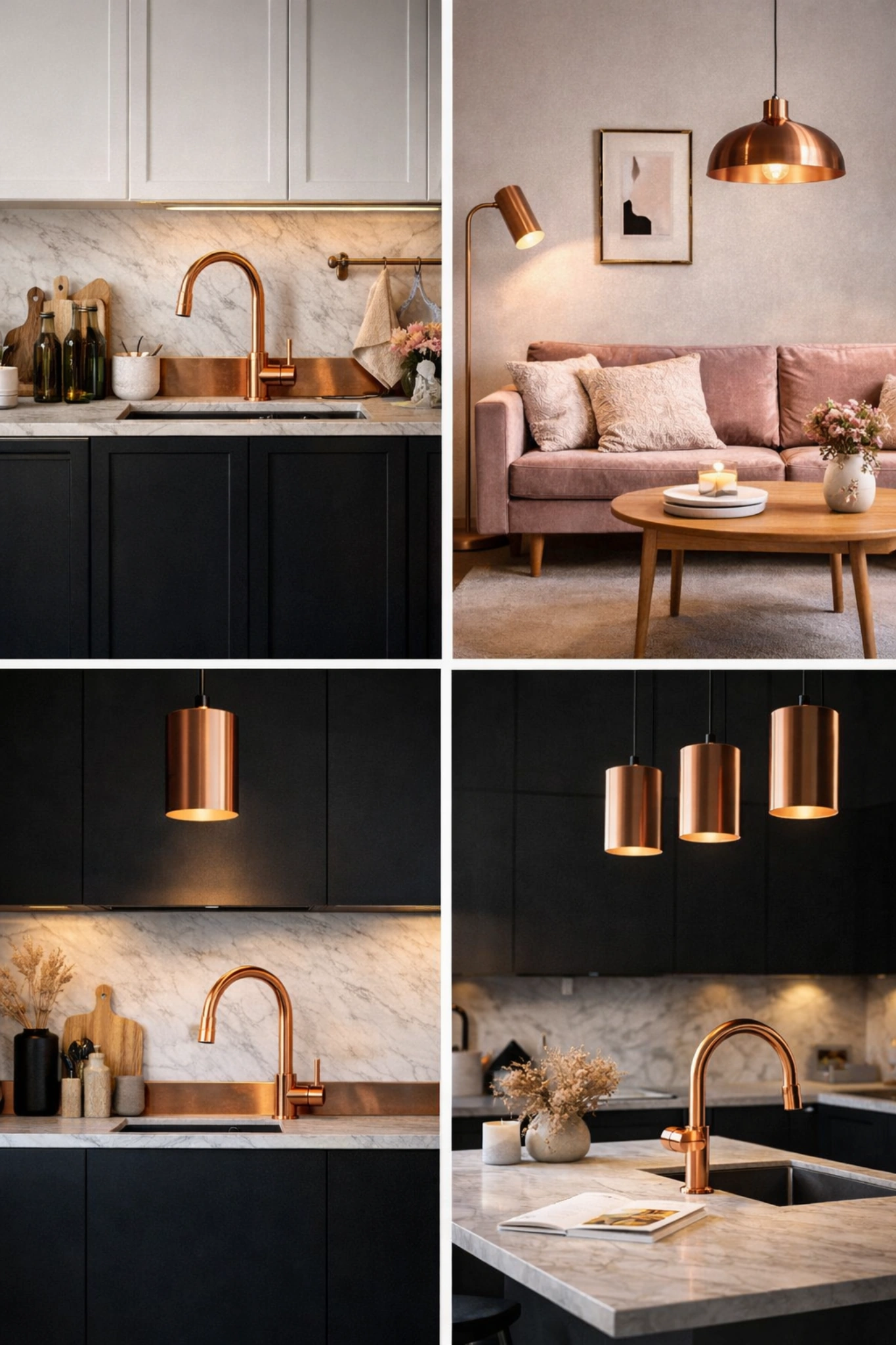
In an industrial composition, matte-black cabinetry and visible pipework can set up a strong contrast. That is a design possibility, not a reason to expose services that should remain protected.
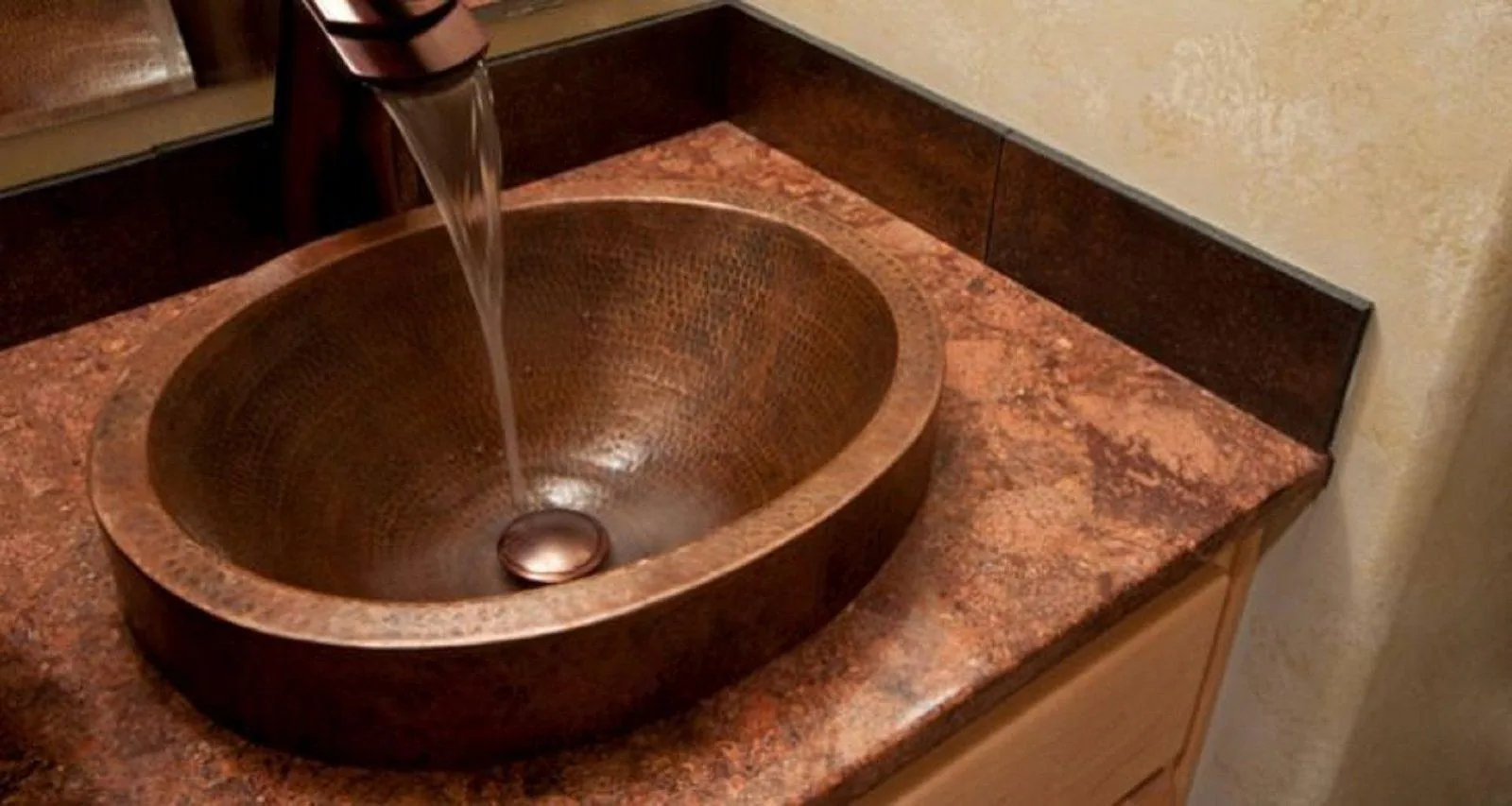
With white marble, pale wood and powder-pink velvet, a copper tone can form a softer, Scandinavian-influenced palette. In a vintage setting, a patinated basin may recall older domestic objects.
These combinations are starting points rather than guaranteed successes. The surrounding proportions and the amount of reflection still matter.
Decide whether patina is welcome
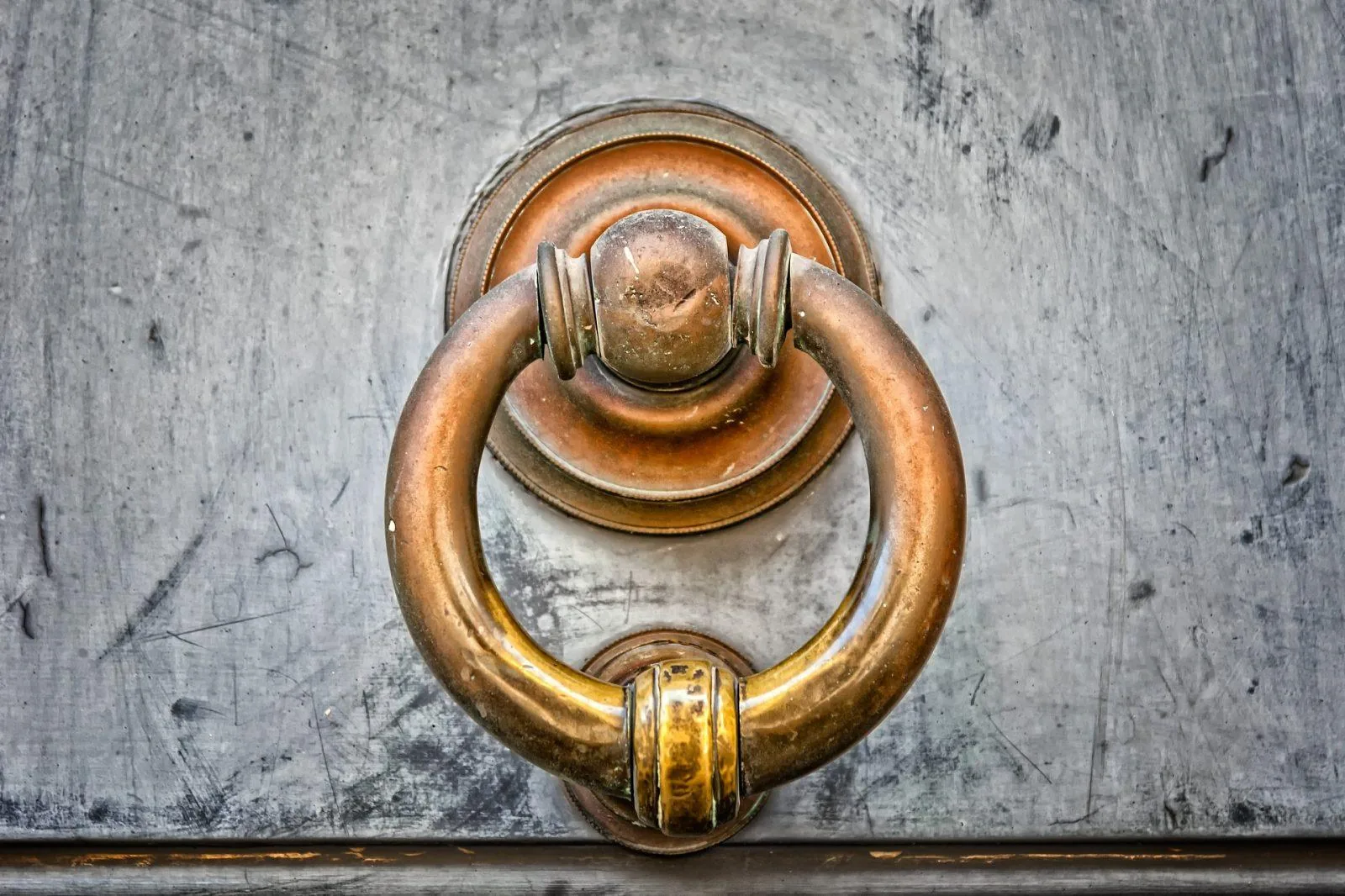
Bare copper reacts to its environment. Acidic food such as lemon or tomato, greasy deposits and repeated moisture can mark it; oxidation may darken the surface or produce verdigris.
On a handle, furniture foot or occasional accent, that evolution may be welcome. On a heavily used countertop, someone wanting an even, permanently bright surface may find it frustrating.
The retained graphic expresses this preference for small touches and cautions against large, intensely sun-exposed areas and repeated water splashes. Actual exposure limits still depend on the product and its finish.
Lacquered or PVD surfaces are not the same as bare copper. PVD means Physical Vapor Deposition; the coating system may improve stability, but the abbreviation does not guarantee scratchproof or maintenance-free performance.
Check the manufacturer’s guidance for water, sunlight and cleaning instead of applying one rule to every copper-colored product.
Gentle care before aggressive polishing
A clean soft cloth or microfiber is the starting point. Where permitted, use neutral soapy water and dry as instructed rather than leave repeated splashes on the surface.
Avoid abrasive green scouring pads, steel wool and scouring powders. Their fine scratches can become especially visible in low-angle light.
The source’s monthly cleaning suggestion is an example of regular light care, not a schedule that suits every use. A frequently splashed faucet and an occasional decorative object have different needs.
Do not apply lemon and salt universally. An acid-based polish suitable for some bare copper can damage a lacquered or PVD finish; use only a method approved for the actual surface.
Read the retained inspiration images as details
The gallery includes a filament bulb on a copper-colored rod, a small door knocker, a hammered basin, an illuminated perforated spherical pendant and a pair of filament bulbs against a dark wall.

Along with the inspiration boards, kitchen image and patina graphic, all nine visuals remain. They show changes of scale and lighting, not a requirement to combine every object in one interior.
Frequently asked questions
Does copper belong in kitchens and bathrooms?
It can, provided the product and finish suit the water exposure and care routine. Bare copper brings a changing patina; a protected copper-colored finish follows its own instructions.

How much is too much?
Use the 2 or 3 accent reference to test a hierarchy, not as a rigid maximum. A dominant metal and controlled repetitions usually make the intention easier to read.
Can any metal cleaner restore the shine?
No. Identify the substrate and coating first. A product marketed for precious metals is not automatically suitable for a faucet finish, and aggressive polishing cannot be assumed reversible.