
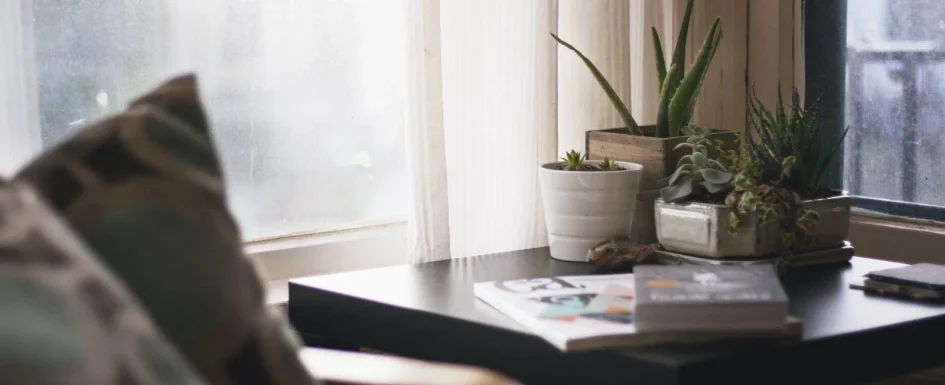
A well-chosen plant does not decorate. It brings a presence into the room.
Plants are among the few decorative elements that live, change, and transform a space organically. They add volume, texture, and a presence that inanimate objects cannot produce. They are also the most accessible decorative element, provided you choose the right species for the light, the size of the room, and the amount of care you are ready to give. The same logic applies when you consider integrating a living wall into an interior: plants should be planned, not improvised.
Choose for survival before choosing for looks
The first question is not “which plant is the most beautiful?” but “which one will survive here?” The light in the room governs everything. A tropical plant with large leaves needs generous indirect light, not a dark corner at the end of a hallway. Watering frequency is the second criterion: some species forgive neglect, others do not. Finally, the available volume determines how large the plant can be and how much room it has to grow.
In interior projects, plants are often considered last, as accessories added after the work is finished. That is a mistake. A large plant occupies real volume in the room, it influences circulation, and it contributes to the visual composition just as much as an armchair or a lamp. Planning it early means integrating it properly rather than squeezing it in wherever space is left.
Four checks before buying
In practice, we check four points before choosing a plant:
Its adult size, not the size it has at the garden center.
Its light, assessed at the exact spot where it will stand.
Access for watering, without having to move a piece of furniture.
Protection of the surface below from moisture, with a saucer or a watertight cachepot on wood floors or wooden shelves.
Light drops very quickly as you move away from a window. A plant that needs bright but indirect light usually belongs one or two meters (about 3 to 6 ft) from a large window, not at the back of the room.

Think about who lives there
Several very common plants, such as pothos, monstera, ZZ plant, and dieffenbachia, contain irritating substances if eaten, and ficus sap can irritate the skin. If you have young children or pets, place them out of reach or choose species generally considered non-toxic, such as spider plant or kentia palm, and always check the label.
Professional tip: if you do not have a green thumb, go for robust species that tolerate irregular watering: fiddle-leaf fig, snake plant, pothos, or ZZ plant. They keep their good looks with little attention. Save the more demanding species, such as calathea or monstera, for rooms where you spend time and will naturally remember to care for them.
Large plants in the living room: volume, light, and placement
A large plant in a living room creates an immediate sense of volume that few other elements can match at the same cost. It thickens the space, creates depth, and brings an organic texture that contrasts with the smooth surfaces of furniture and walls. Placed next to an armchair, it creates a more intimate, greener corner. Placed in a sparsely furnished corner, it makes intelligent use of a space that would otherwise stay empty.
Natural light determines placement. Most large tropical plants like indirect light, without direct sun that would scorch their leaves. An east or northeast window is often ideal. In darker rooms, some species adapt to lower light, provided watering is carefully controlled.
A 50 m² living space where plants go up
In the design study for a 50 m² (about 540 sq ft) living space, we applied this principle by raising the plants off the floor. Wall shelves in pale solid wood with a honey finish were drawn to hold them near the large glazed opening. The plants enjoy natural light and the floor stays clear for moving around. Wooden sills under the windows extend the same material, together with a gray-green paint and a divider made of wooden battens set on the diagonal.
Using height lets you multiply plants without cluttering walkways, provided the fixings are sized for the weight of a freshly watered pot.
See our projects in video
Real floor plans and renovations explained step by step on the ArchiWorking YouTube channel. Watch how spaces are reworked before the works begin.
Graphic plants and decorative foliage: our favorite species
Monstera deliciosa

Monstera is probably the most recognizable houseplant. Its cut leaves are graphic and generous and dress a space in one gesture. It was the star of 1970s interiors and is making a confident comeback in contemporary homes. A mature monstera can reach 1.5 m (about 5 ft) in height and as much in width, which makes it a true element of composition. It appreciates a moss or coir pole to guide its aerial roots as it grows.
Calathea
Calathea is smaller but just as graphic. Its leaves range from light to dark green with contrasting veins that make it a decorative object in its own right. It likes humidity and soft light, which makes it ideal for a bright bathroom or a kitchen. It prefers water low in lime, such as rainwater or filtered water, and humid air; a tray of damp clay pebbles under the pot helps during the heating season.
Fiddle-leaf fig
The fiddle-leaf fig, with its tree-like habit and large matte leaves, brings strong verticality and plant presence. It is often the choice when you want a plant that structures the room visually without taking it over. It dislikes being moved, so give it a permanent, bright spot away from drafts and radiators.
Snake plant and ZZ plant
Snake plant and ZZ plant, by contrast, fear too much water. Let the potting mix dry out between waterings.
For more surprising greenery, a potted olive tree or bamboo in a planter can work in some very bright spaces, as long as their growth is anticipated. This is where the combined eye of an interior designer and landscape architect such as Clara AJMAR adds real value: knowing which plant works in which context, not only visually but botanically.
To multiply these plants at low cost, our guide to propagating cuttings explains methods in soil and in water. And if you have a sunroom or a heavily glazed room, our article on the winter garden explains how to choose species according to the temperatures of the space.
The cachepot: choosing the right container for the room’s style
The cachepot accounts for much of the final effect. Beautiful foliage in a container that clashes with the rest of the room loses all its impact. Choosing it follows the same rules as the other elements of the composition: material, color, style.
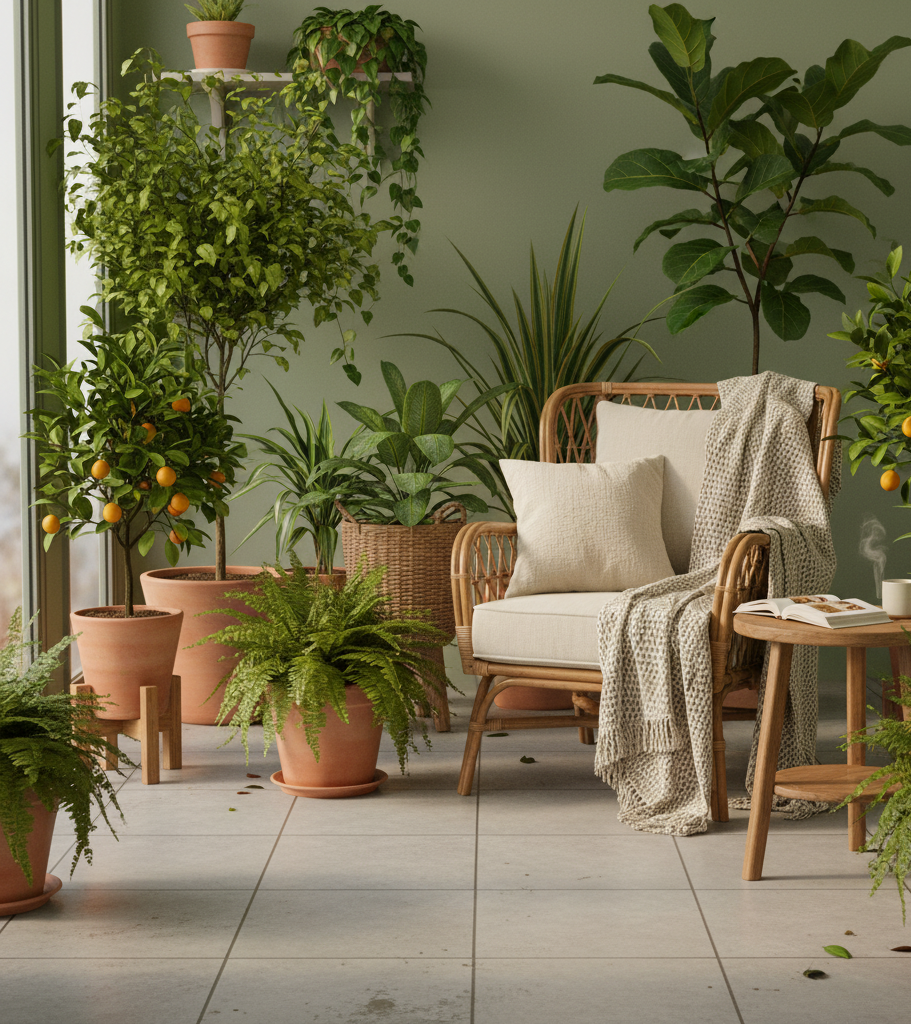
In a natural, organic interior, the woven basket remains unbeatable. Plain or patterned, it accompanies the plant without competing with it. In a contemporary or industrial interior, a gray concrete pot or raw terracotta creates a strong, effective contrast. In a minimalist interior, a matte white pot or softly tinted glazed pottery blends in seamlessly.
Practical rules for pots
A few practical rules complete that style choice:
The growing pot, with drainage holes, slips into the cachepot with 2 to 3 cm (about 1 in) of clearance all around, for easier handling and air circulation.
After watering, empty any water left at the bottom after half an hour; standing water rots roots.
A woven basket or natural-fiber container needs a waterproof liner or a saucer.
When repotting, every two or three years in spring for most plants, choose a pot only slightly wider than the previous one, about 2 to 4 cm (1 to 1 1/2 in) more in diameter.
For large plants, a saucer on casters makes cleaning easier and protects the floor.
An 80 m² apartment: scaling containers to the space
The container must also be in proportion with the space. In the renovation study for an 80 m² (about 860 sq ft) apartment, we designed an entrance combining a mirror, a console, a shelf, and cacti, in an atmosphere of pale wood, cane, and light and dark khaki green paint. The delicate point was where to place the plants: enough light for the cacti, no obstruction to circulation, and pots scaled to a shallow console. In an entrance, small grouped containers work better than one large planter spilling into the passage.
A plant chosen like a piece of furniture
Houseplants are among the most accessible ways to transform a room, but they deserve to be chosen with the same care as a light fixture or a piece of furniture. The right species, in the right place, in the right container: that is the difference between a plant that decorates and one that truly brings a presence to the space.
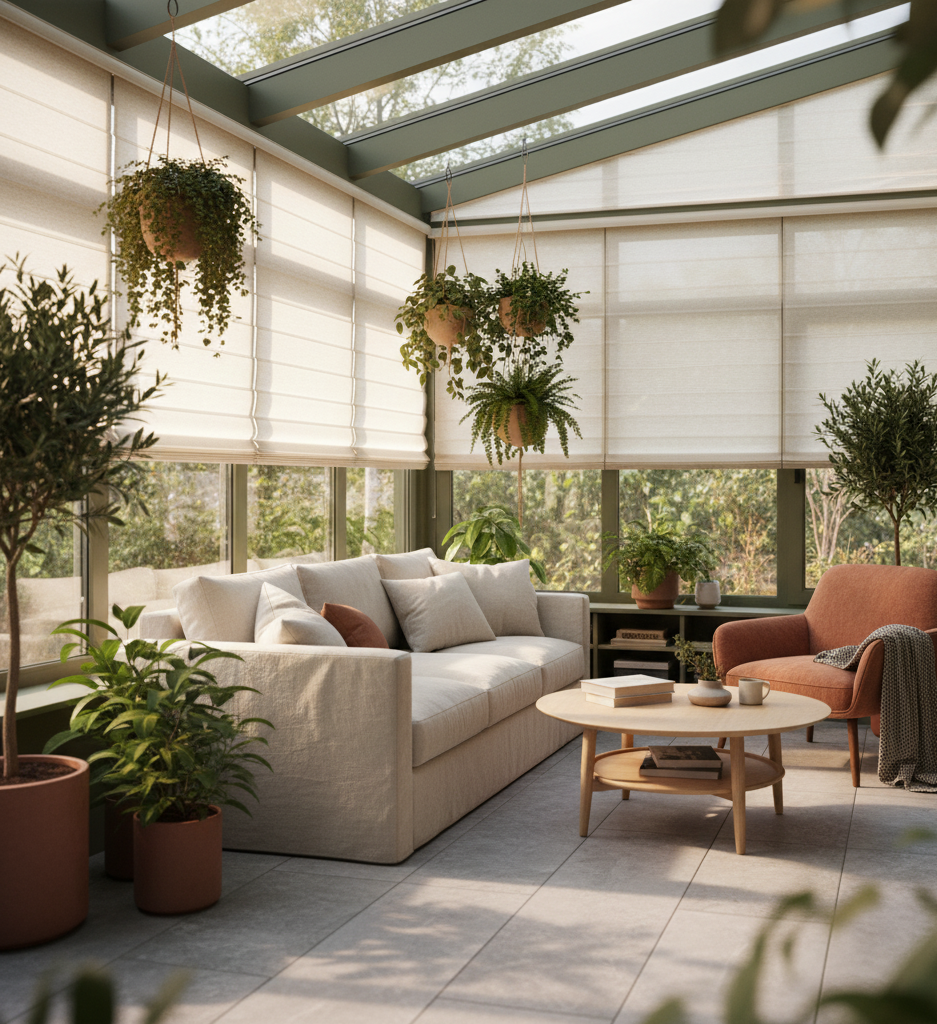
Integrating plants at the design stage gives a more coherent result, without having to move furniture after the work to find them a spot. More real projects and annotated plans are on the ArchiWorking YouTube channel, linked in the box above.
Frequently asked questions about houseplants
Which plant suits a living room with little light?
Choose robust species: pothos, ZZ plant, snake plant, or fiddle-leaf fig. Avoid demanding tropical plants such as monstera or calathea, which need generous indirect light to keep their foliage beautiful.
How do you fit a large plant into a living room without crowding it?
Choose a corner or a spot next to an armchair, where the plant occupies space that is naturally little used. Think about its adult size, not its size at purchase. A mature monstera can reach 1.5 m in every direction; planning the space in advance avoids rearranging the whole composition two years later.
Which cachepot should you choose for a houseplant?
The cachepot should match the style of the room: a woven basket for a natural interior, concrete or terracotta for a contemporary style, softly tinted glazed pottery for a minimalist interior. The container accompanies the plant without competing with it.
Is monstera difficult to care for?
No, it is one of the most robust houseplants. It tolerates some irregular watering and adapts to varied light conditions. Moderate watering and decent indirect light are enough to keep it in good shape.
Are houseplants dangerous for children and pets?
Some are if eaten: pothos, monstera, ZZ plant, and dieffenbachia contain irritating substances, and ficus sap can irritate the skin. Keep them out of reach or prefer species generally considered non-toxic, such as spider plant or kentia palm, and check the label.