
Depth is one of the first questions an interior architect settles when designing storage. A few centimeters off and daily use becomes a chore. These technical rules help you get it right. For the wider picture, see the guide on custom walk-in closet design.
1. Why 60 cm is the optimal depth
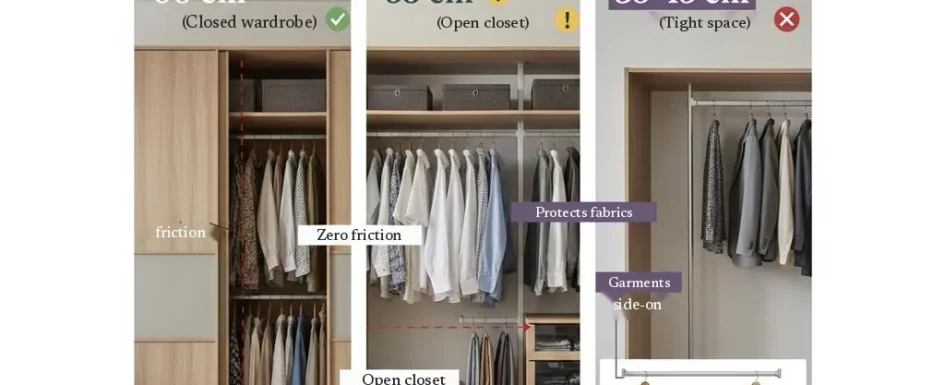
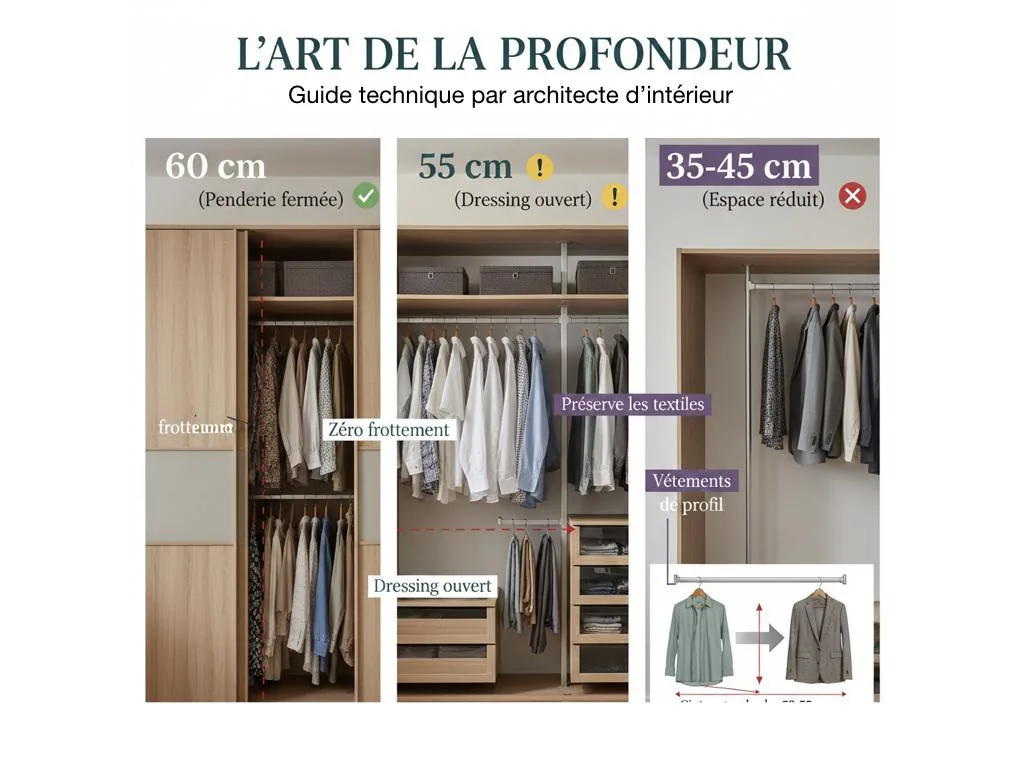
A depth of 60 cm (about 24 in) is the reference for hanging space closed by hinged or sliding doors. It delivers the comfort you need:
- No rubbing: clothes touch neither the back panel nor the inside of the door.
- Fabric care: jacket sleeves stay uncreased and rail mechanisms stay clear.
- Versatility: it is the only depth that takes bulky items such as winter coats.
Beyond theory, a badly sized depth directly cuts storage capacity and daily comfort. We have seen closets designed without an overall plan where hangers were pushed sideways or the back panel was cut out to make clothes fit. Such fixes usually reveal an ineffective initial design that harms comfort, looks and durability.
The right approach starts with uses: main hanging area, underwear storage, shelves, bulk storage or special items. Once these functions are set, depth is adjusted to the technical needs, the type of clothing, the door system and the space available. The result is a closet that is functional, coherent and truly suited to how it is used.
See our projects in video
Real floor plans and renovations explained step by step on the ArchiWorking YouTube channel. Watch how spaces are reworked before the works begin.
Understanding the standards: carcass and doors
Cabinetmaking often works in modules, so it is vital to distinguish usable depth from overall depth to avoid surprises at installation.
Expert take: most standard units use a 48 cm carcass. Add about 2 cm for the door and you reach 50 cm. That is often not enough for front-facing hanging, since a hanger naturally needs 53 to 55 cm.
Options for tight spaces
If the room cannot take 60 cm, there are design solutions. An open closet can go down to 55 cm. In very tight spots of 35 to 45 cm, pull-out rails let clothes hang side-on rather than facing out.
Your questions about dimensions
Can hanging space fit in 45 cm of depth? Yes, but only with a pull-out rail. A standard hanger cannot sit face-on in less than 50 cm without sticking out of the unit.
What depth for sliding doors? Ideally allow 65 cm overall, since the track system takes about 8 to 10 cm inside.
In a complete primary suite, closet sizing drives circulation and comfort in the sleeping area. Success relies on a rigorous layout: whatever the material, the structure must first respect how your clothes hang.