

A colorful rug can connect the colors already present in a room rather than introduce another competing element. It also gives furniture a shared setting, adds texture and helps a seating or dining area read as a whole.
The most useful starting question is therefore not “Which rug looks striking?” but “What does this room need the rug to connect?” Color, size, shape and safe placement have to be considered together.
Begin with the existing palette
Identify the 3 or 4 colors already supplied by the sofa, curtains, cushions and walls. A photograph can help reveal which tones dominate rather than which small accessory happens to catch your eye.
The source suggests selecting 3 dominant shades and looking for a rug that contains at least 2 of them. This is a practical way to test continuity, not a compulsory rule for every successful interior.
In one living-room project, a gray sofa, terracotta curtains, mustard cushions and a duck-green wall were brought together by a rug containing all four tones.
The rug became the meeting point of an existing palette. The room felt more resolved without replacing the other elements.
The colored-wall guide considers the same balancing exercise from the wall outward. Where wall and rug are being chosen together, assess them as one composition rather than two unrelated decisions.
A 75 m² apartment: repeat a color across rooms
In the full renovation of a 1970s apartment, the entry and dining room were linked through color. The entry was painted Tollens CR4113-3 Méditerranée blue.
The original marble floor was retained, while wood-look laminate laid in a chevron pattern was used in the neighboring rooms. Keeping that distinction was part of the material composition.
The dining-room rug repeated blue tones from the entry, providing continuity without painting all the walls the same color. A wicker pendant, decorative objects and varied textures softened the relationship to the mineral surfaces.
This is a different strategy from a multicolored rug that repeats every accent. One important color can travel through several rooms when the surrounding materials support it.
Size for the furniture, not the empty patch of floor
A rug too small for its seating group can look disconnected. The source’s starting guideline is to place the sofa’s front feet on it so the furniture and textile belong to the same arrangement.
Test the actual furniture footprint before choosing a standard size. A small rug floating between a distant sofa and chairs may decorate the center without defining the seating area.
“Bigger is better” is not a complete rule either. Door swings, circulation and the room’s other zones still need to work, including the occupied positions of chairs around a dining table.
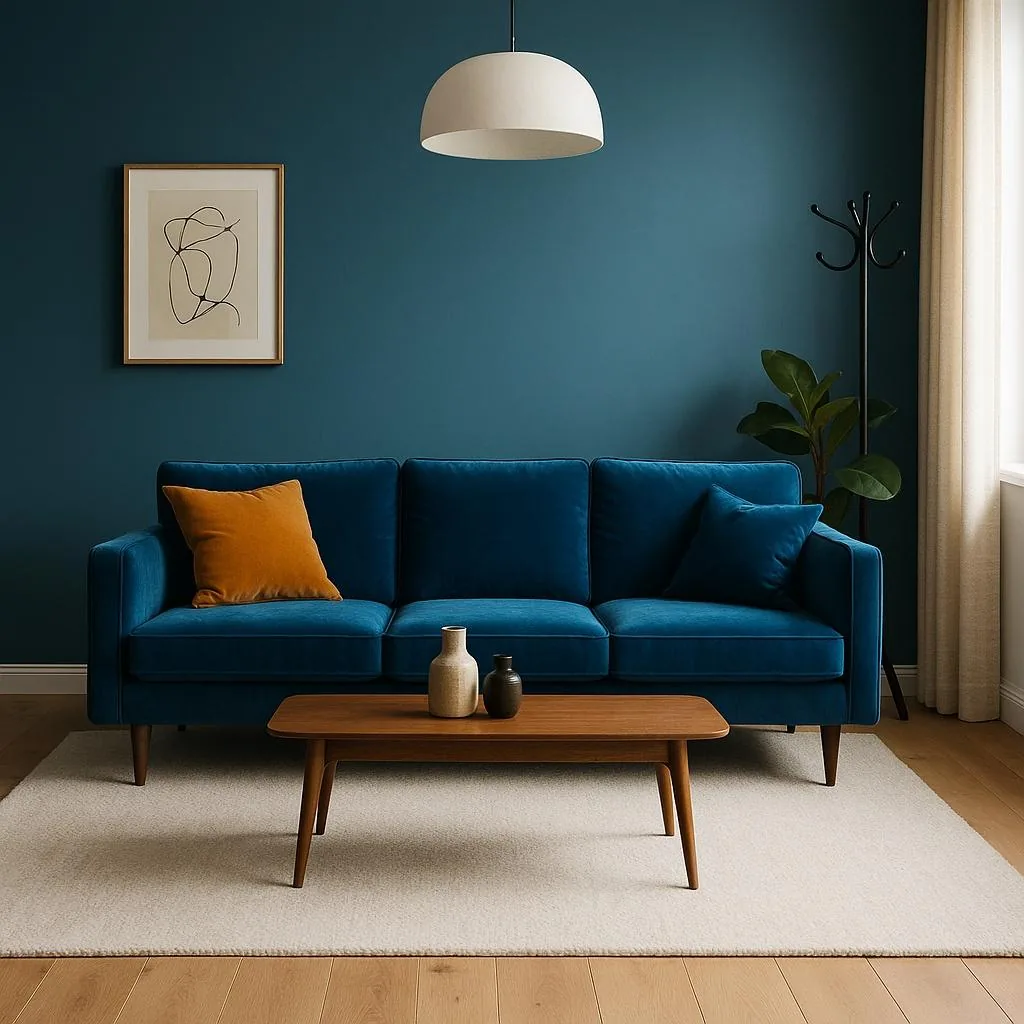
The retained blue living-room photograph shows a cream rug balancing a blue wall and velvet sofa. It demonstrates that a rug can act as a quieter counterweight rather than carry every strong color itself.
Choose a shape with a purpose
A round rug can soften a composition dominated by straight edges. It may suit a circular coffee table or establish a compact reading area.
A rectangle often gives a longer living room or dining area a clearer direction. Neither shape is intrinsically correct; relate its outline to the furniture and routes.
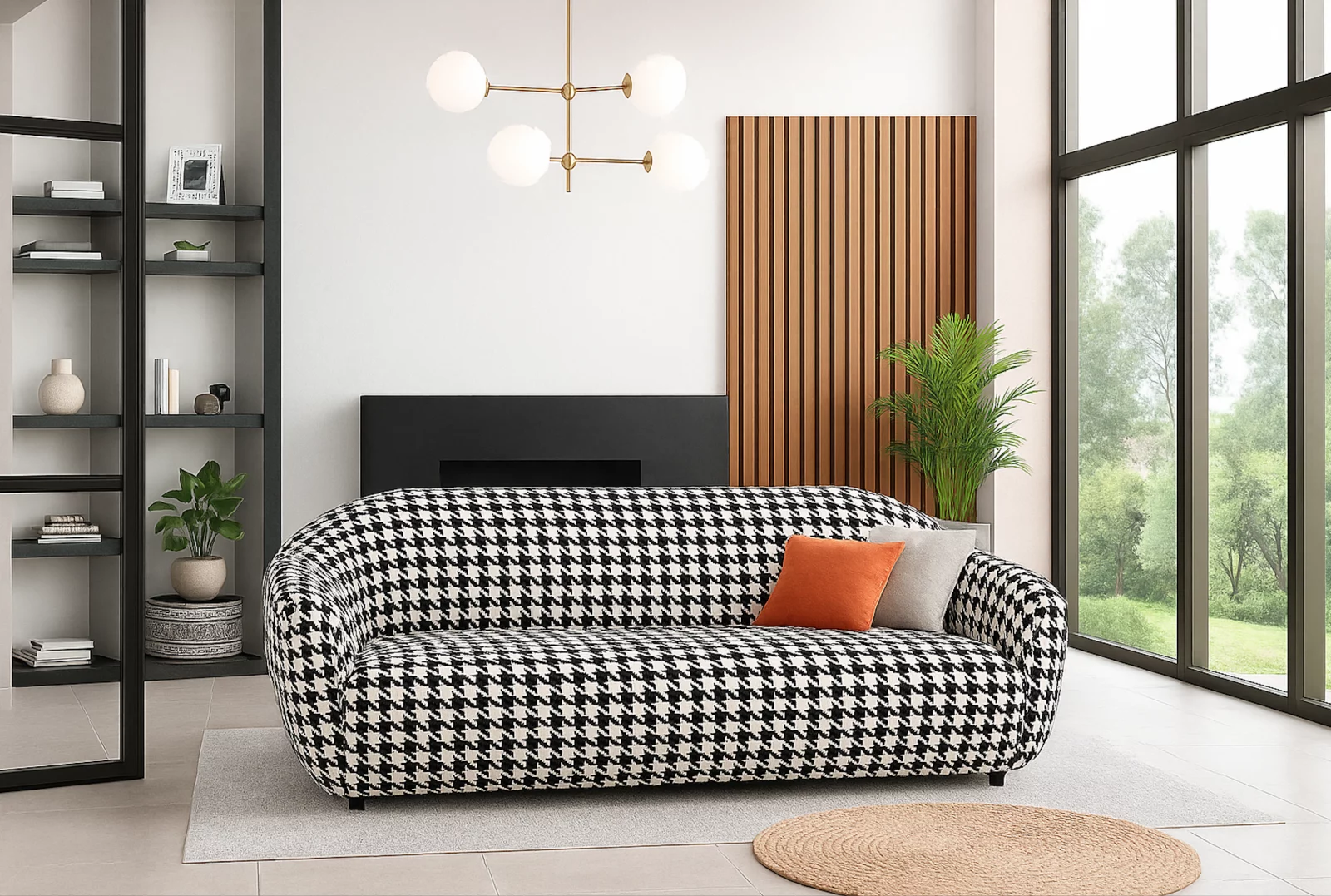
The second photograph retains the round jute rug beside a houndstooth sofa. Its material and geometry provide another kind of connection than an exact color match.
See our projects in video
Real floor plans and renovations explained step by step on the ArchiWorking YouTube channel. Watch how spaces are reworked before the works begin.
A family-house bedroom uses two different roles
In a complete family-house renovation, the primary bedroom combined a white rectangular rug with a round rug carrying foliage motifs related to the black-and-white wallpaper.
Water-green paint, pale wood furniture and cane details supported a bohemian atmosphere. The rectangle stayed neutral while the round rug repeated the wallpaper’s motif.
This project is why the initial color-matching exercise should remain flexible. A deliberate motif, an appropriate shape and an agreement with existing materials can matter more than reproducing every shade.
When several rugs share a room, make their relationship readable rather than expect each to be the focal point. Check their edges and the routes between them as well as the overall photograph.
Safe placement belongs to the design
The source recalls tradespeople tripping over poorly positioned rugs during an intervention. Curled edges and textiles projecting into a passage are not merely visual defects.
Use suitable placement and, where needed, a compatible anti-slip solution. A heavy piece of furniture on one corner does not automatically secure the entire rug.
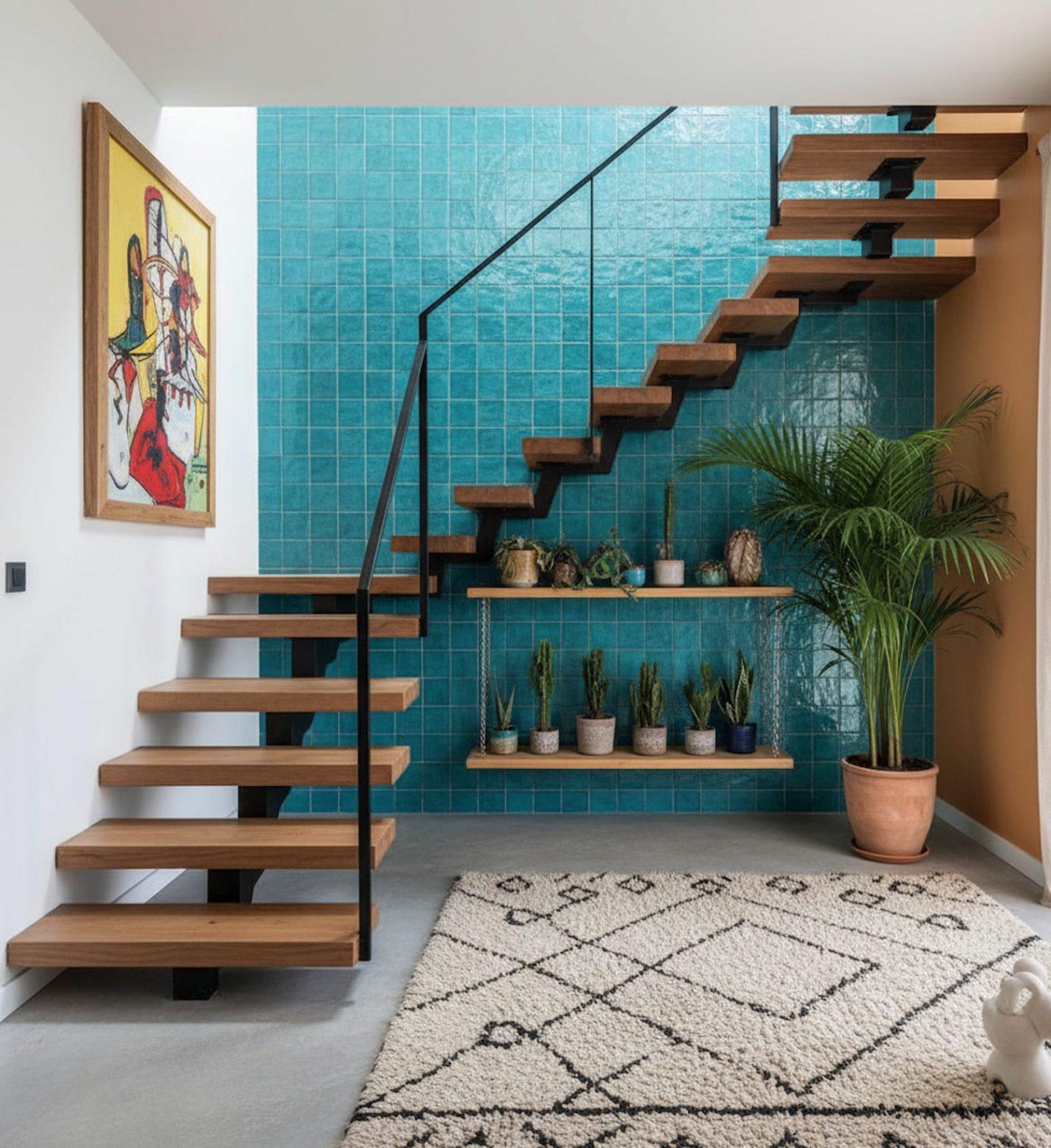
The third image preserves a small graphic rug near a floating timber stair and turquoise wall. An image of a location does not remove the need to check flatness, access and the stair approach in the actual home.
Outdoor rugs are a product specification, not just a style
A terrace or balcony rug can define an outdoor room. Check its UV performance, weave, moisture behavior, barefoot texture and cleaning instructions rather than rely on the word “outdoor.”
Color retention varies, as does the ability to dry after rain. A suitable rug may serve for several seasons, but exposure, care and product quality determine that outcome; there is no universal promise against fading or mold.
The balcony article also considers drainage and flooring. A textile should not hide a blocked outlet or trap persistent moisture beneath an unsuitable installation.
A rug can also become a wall textile
On a wall, a rug adds texture and visual depth above a sofa or in a headboard composition. It should still relate to the room’s palette rather than contradict the surrounding materials by accident.
Choose fixings appropriate to the textile’s weight and the wall. Their appearance may be discreet or intentionally visible, but the support needs to be designed for the actual piece.
Frequently asked questions
Must the rug contain every room color?
No. Repeating 2 dominant shades is the source’s initial exercise; the bedroom project shows how one well-chosen motif and neutral support can also work.
How large should a living-room rug be?
Start by testing the sofa’s front feet on it, then assess the whole group and circulation. A standard measurement alone cannot establish the right fit.
Are all outdoor rugs equally weather resistant?
No. Compare the actual UV, moisture, weave and care specifications. A label does not guarantee identical performance or life span.
Can it be hung on the wall?
Yes, with an appropriate mounting system and a clear relationship to the room. The visual idea does not replace checking the weight and substrate.